
Upgrade path
< 3 ms
weld time, all three generations
0
filler or consumables
0.5-5.0 ms
858 timing delay, adjustable
3 ranges
capacitance, plus Regular and Heavy Duty modes
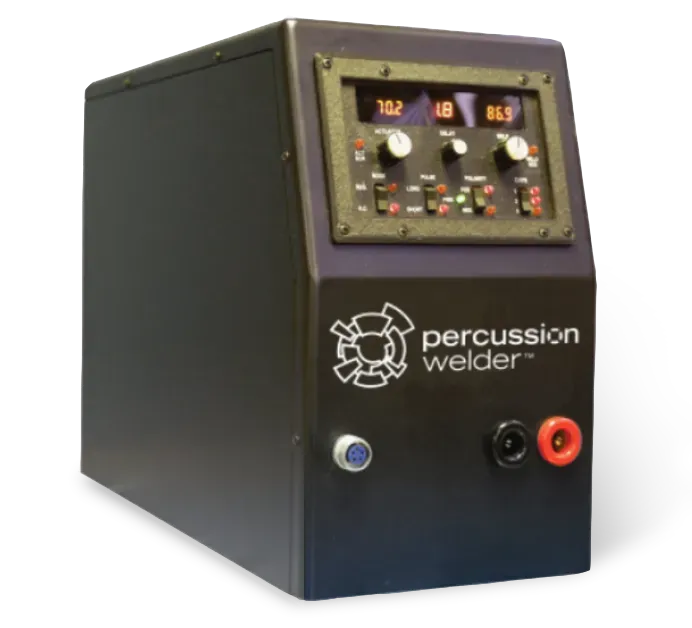
Product Heritage & Upgrade Path
From the Superior 528 to the Model 858: Six Decades of Percussion Welding, One Unbroken Lineage
If you're running a Superior 528 or MTI 628 and wondering what's next — good news: the physics hasn't changed. The controls got a lot better. And we still answer the phone.
< 3 ms
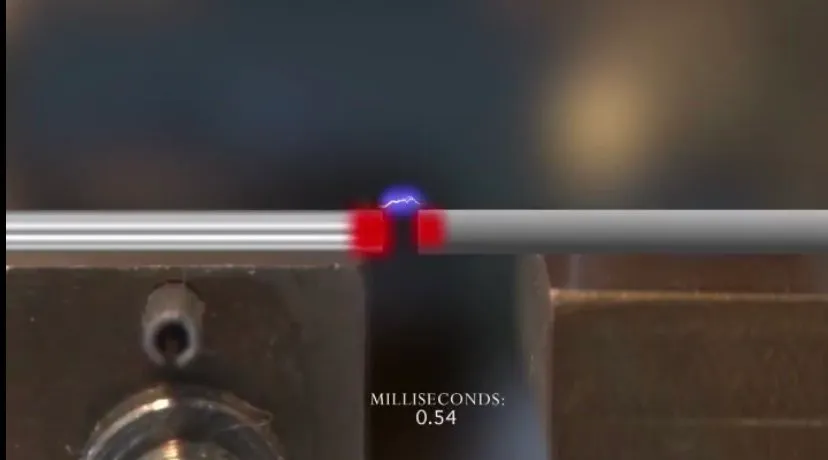
weld time — same as always
Zero filler
— still autogenous
30+ materials
in our schedule database
Chapter 01 / 11
Still Running a 528 or 628? You're in Good Company.
Some of those machines have been running production for two decades. When your engineer designed a $400 million medical device around a percussion weld spec, nobody questioned the process — because it worked. It still works.
But capacitors age. Contacts wear. And when the machine that's been faithfully bonding tungsten to nickel every 4 seconds finally starts throwing inconsistent arcs, you need to know: what's the upgrade path, and will my weld schedules carry over?
Short answer: yes. The Model 858 Percussion Welder is the direct successor to both the Superior 528-series and the MTI 628. Same process physics. Same weld joint metallurgy. Dramatically better controls.
The engineering punchline: All three generations use short, high-energy capacitor discharges and rapid mechanical motion to forge direct, filler-free joints. The 858 didn't reinvent percussion welding — it just gave operators front-panel access to every parameter that used to require a screwdriver and a prayer.
Chapter 02 / 11
The Evolution: 528 → 628 → 858
Three machines. One process. Each generation refined what mattered without changing what worked.
The Foundation
Superior Model 528 Series
The 528G and 528A power supplies were among the first commercially available percussive-arc welders. They proved the concept in production: short, high-intensity discharges could reliably weld pins, tabs, and thermocouples — including dissimilar metal combinations that made conventional processes sweat. Referenced in multiple patents (including US4417120) as the benchmark power source for percussive arc joining.
The Refinement
MTI MicroWelding Model 628
Building on the 528 foundation, the 628 broadened the usable energy range, added selectable polarity from the front panel, and lowered the required weld force — critical for delicate parts with low columnar strength. Same percussive-arc physics, but now an operator could tune for nitinol, aluminum, tungsten, and copper without the process equivalent of open-heart surgery on the power supply.
The Current Standard
Model 858 Percussion Welder
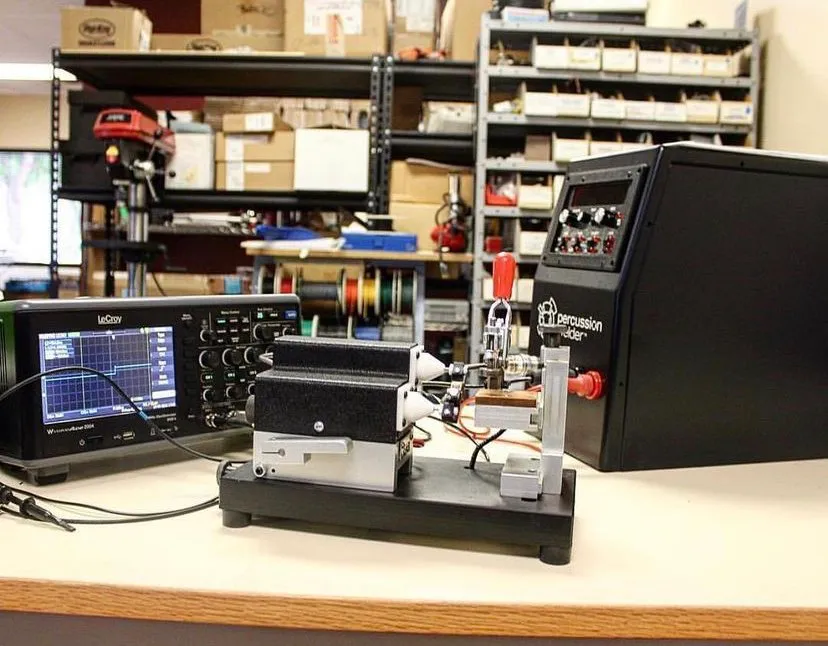
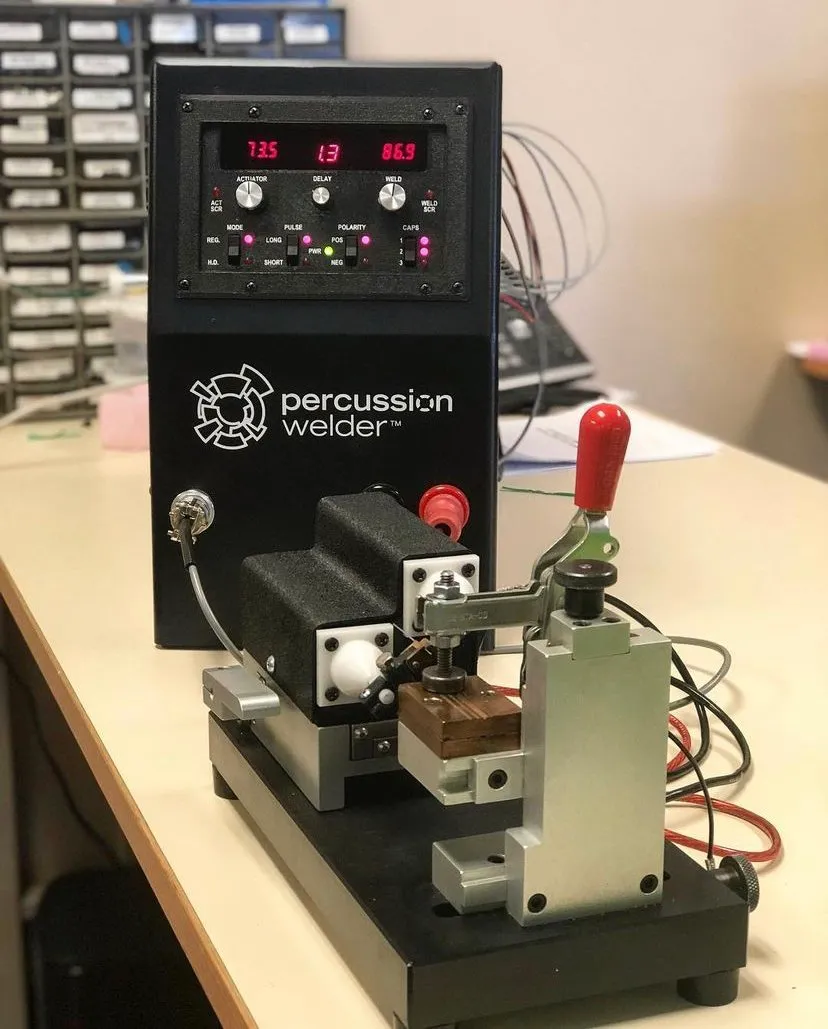
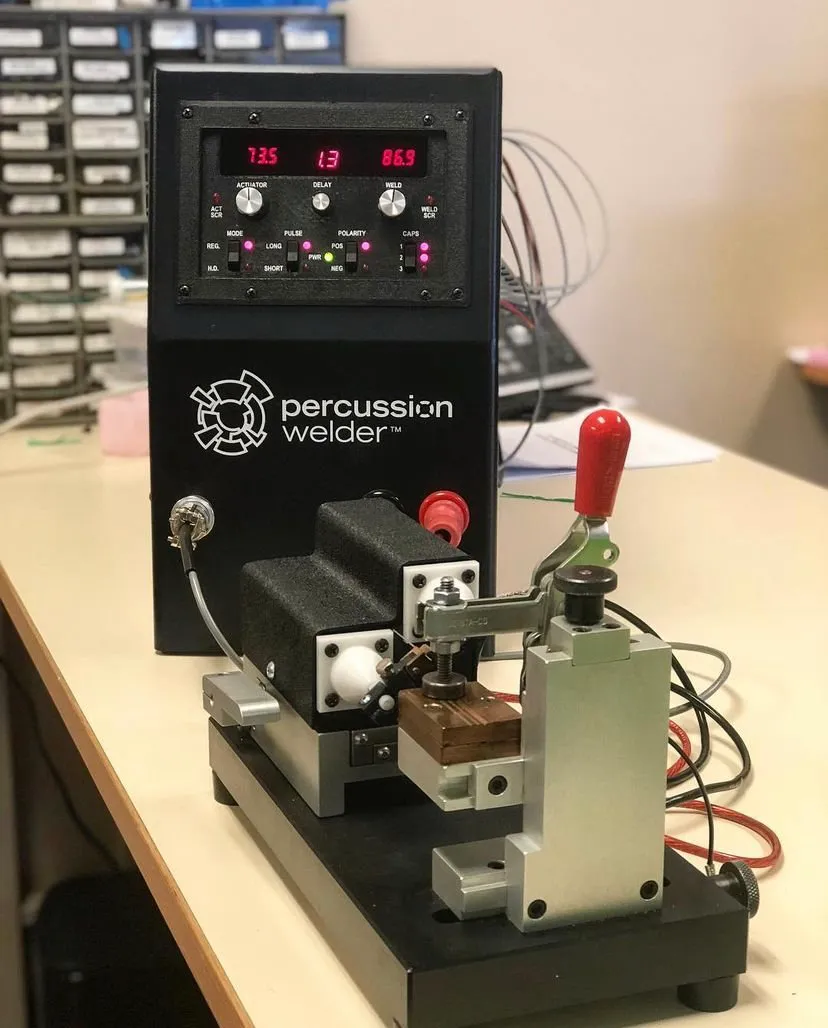
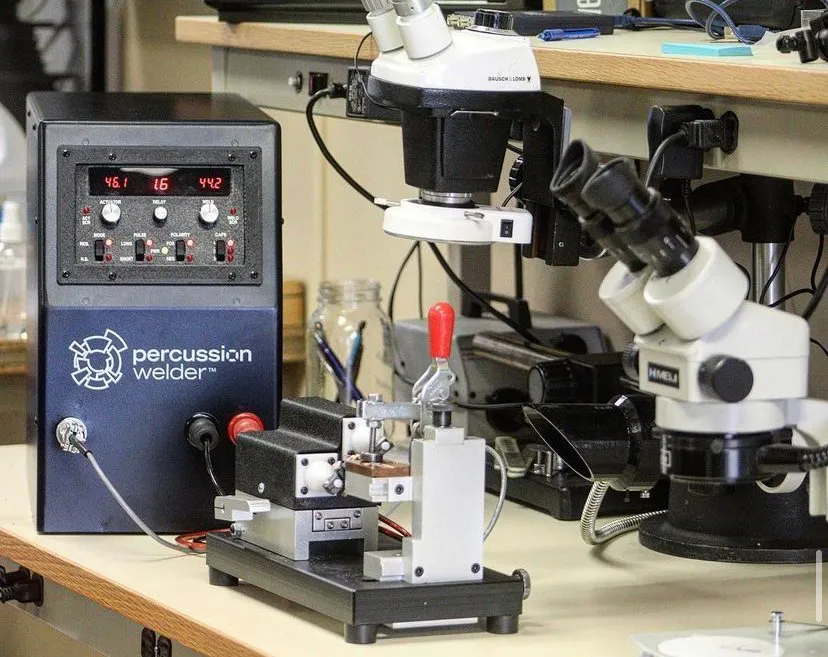
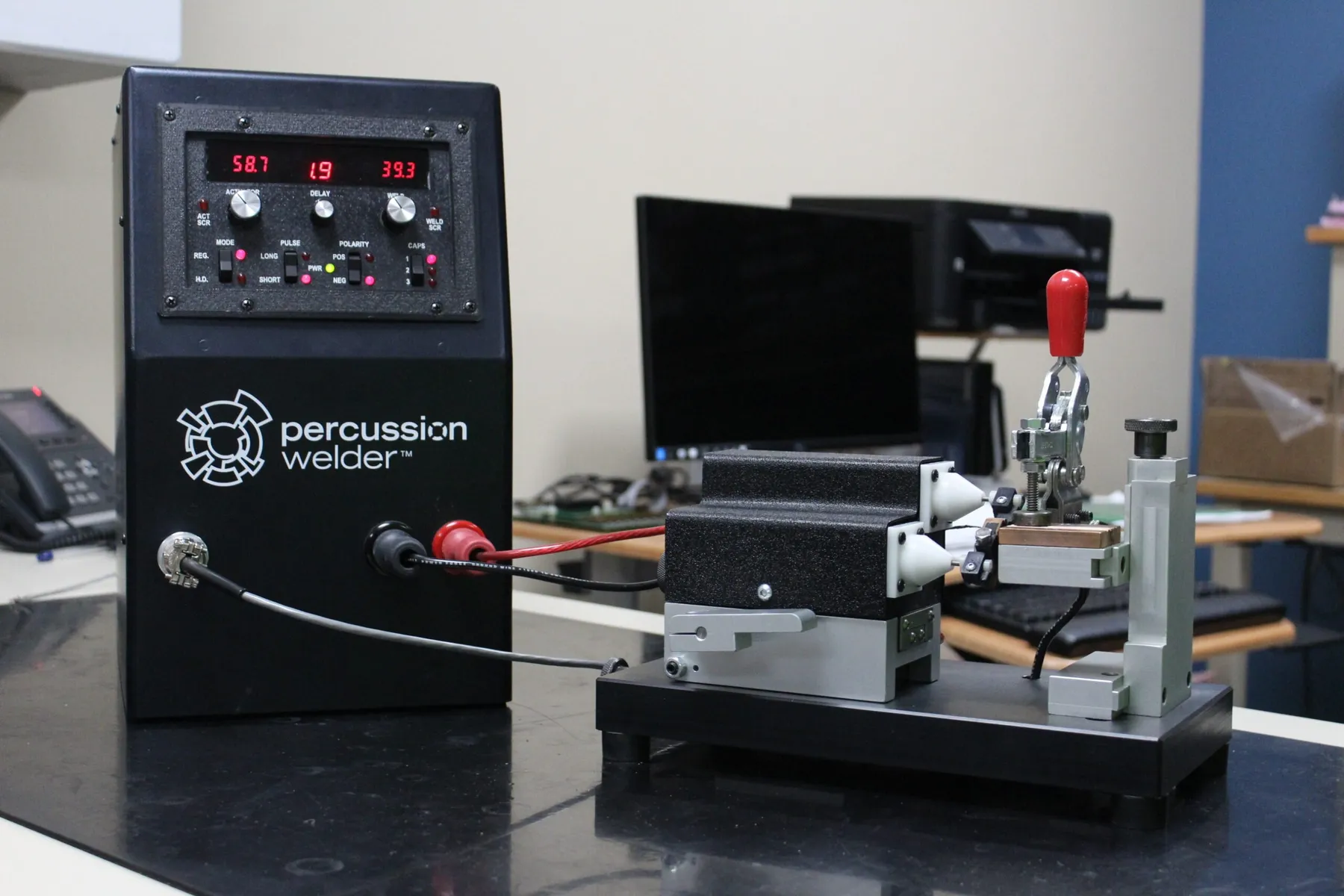
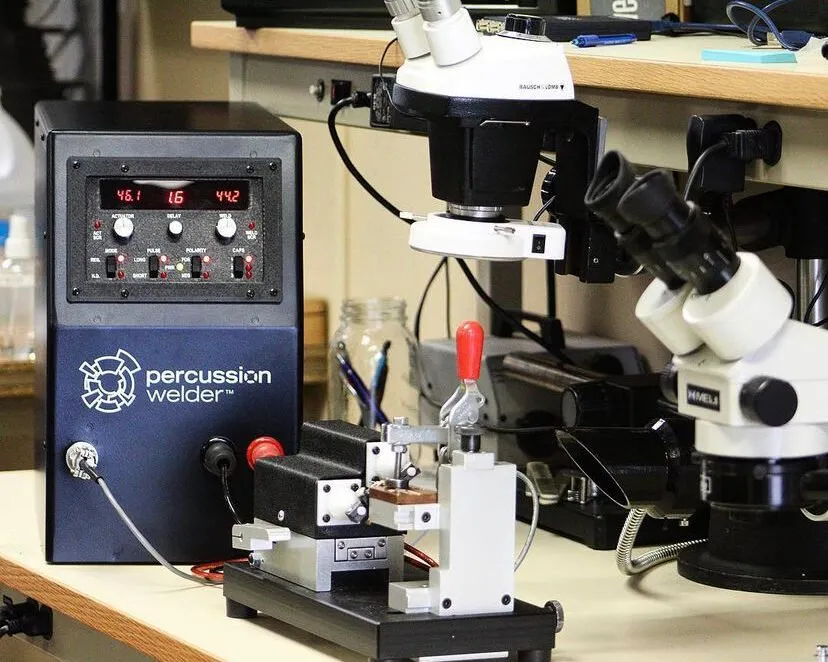
The 858 is a full micro-welding control platform. Fine adjustments to actuator velocity, timing delay, weld voltage, pulse width, polarity, and capacitance — all from the front panel. Pair it with the 726 Bench Fixture for precision alignment and the optional Percussion Weld Monitor for pass/fail waveform analysis. Sub-3 ms welds with near-zero joint resistance, documented and repeatable across medical, aerospace, automotive, electronics, and defense applications.
Want to see it on your parts?
Send samples and we'll run test welds before you commit.
Gallery
The current system
What replaces the standalone supply.

Chapter 03 / 11
Side-by-Side: What Changed, What Didn't
The process column reads the same across all three rows. That's the point — percussion welding works. The controls are where three decades of engineering investment shows up.
| Capability | Superior 528 | MTI 628 | Model 858 ✦ |
|---|---|---|---|
| Process Type | Arc-percussive, capacitor discharge | Arc-percussive, capacitor discharge | Arc-percussive, capacitor discharge |
| Filler Material Required | None (autogenous) | None (autogenous) | None (autogenous) |
| Dissimilar Metal Capability | ✓ Limited alloy range | ✓ Expanded range | ✓ 30+ material combinations documented |
| Selectable Polarity | — Manual reconfiguration | ✓ Front panel switch | ✓ Front panel, integrated with schedules |
| Actuator Velocity Control | Basic | Adjustable | Continuously variable 0–160V, front panel |
| Timing Delay | Fixed / limited | Adjustable | 0.5–5.0 ms, precision adjustable |
| Pulse Width Control | — | Limited | ✓ Long/Short, front panel selectable |
| Capacitance Ranges | Fixed | Selectable | 3 ranges + Regular/Heavy Duty modes |
| Stored Weld Schedules | — | — | ✓ Programmable parameter sets |
| Integrated Monitoring | — | — | ✓ Optional Weld Monitor (good/no-good) |
| System Integration | Standalone power supply | Standalone power supply | 858 + 726 Bench Fixture + Monitor ecosystem |
| Typical Weld Time | < 3 ms | < 3 ms | < 3 ms |
Notice the last row. Three generations of engineering and the weld time didn't change. When you're already faster than a blink (literally — it takes 400 ms to blink and about 2 ms to percussion weld), the wins are in control, repeatability, and documentation. The 858 delivers all three.
Chapter 04 / 11
The 858 System at a Glance
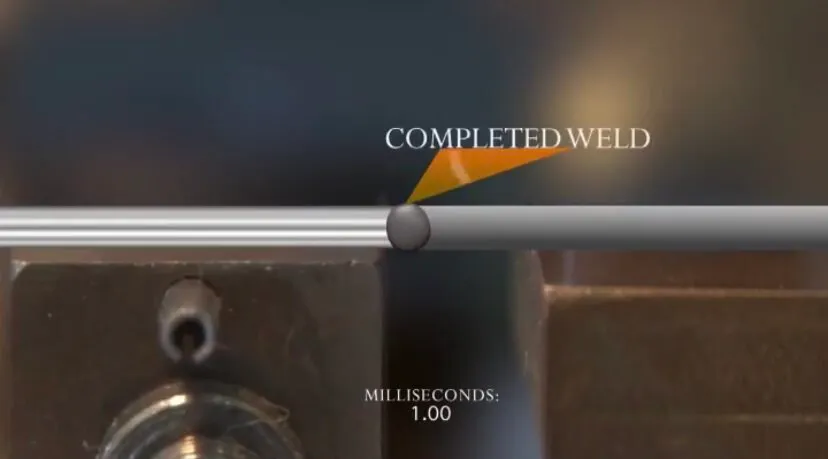
<2ms Typical weld cycle 30+ Material combinations documented 0 Consumables required ≈0Ω Added joint resistance
Chapter 05 / 11
Running a 528 or 628? Let's Talk Upgrade.
Bring your current weld schedules. We'll show you exactly how they translate to the 858 — live, on your materials if you bring them. No PowerPoint. Real welds.
Want to see it on your parts?
Send samples and we'll run test welds before you commit.
Chapter 06 / 11
What Carries Over From Your Existing Setup
This is the part that matters when you're justifying the upgrade to procurement. (We've been there. We speak spreadsheet.)
Your Weld Schedules Transfer
If you've got a binder full of hand-tuned 528 or 628 parameters — actuator settings, capacitance, voltage, polarity — those are your starting points on the 858. The physics is identical. You'll likely refine them further because the 858 gives you finer control than your old machine could, but you're not starting from zero. That binder is still gold.
Your Process Knowledge Transfers
Everything your operators know about material prep, fixture alignment, polarity effects on copper-to-stainless joints, and what "too explosive" sounds like — that knowledge is directly applicable. The 858 has a faster learning curve than the machines it replaces, but the process intuition your team has built? That's an asset, not a liability.
Your Qualification Data Is Defensible
For aerospace and medical applications where re-qualification is the four-letter word: the 858 produces the same metallurgical bond via the same arc-percussive process. Same joint type, same filler-free autogenous weld, same minimal HAZ. The control documentation gets better, not different — which is usually what auditors want to hear.
Real talk from the shop floor: We've seen engineers treating their 528 like a 1992 Toyota pickup — "it still runs, don't touch it." We get it. But when your capacitors are original equipment from the Clinton administration and your documentation is a sticky note on the power supply, the 858 isn't just an upgrade. It's risk mitigation that happens to also make better welds.
Chapter 07 / 11
The Modern Percussion Welder System
Where the 528 and 628 were standalone power supplies, the 858 is the control center of an integrated system. Here's what you're actually getting:
858 Percussion Welder
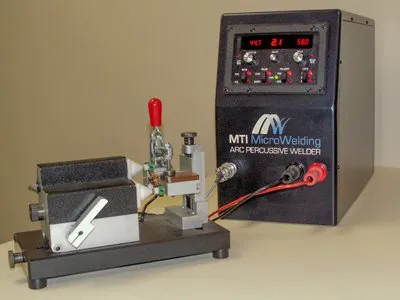
The brain. Programmable energy and process controls with front-panel access to actuator velocity, timing delay, weld voltage, pulse width, polarity, and capacitance. Store and recall weld schedules instead of re-dialing parameters for every job changeover.
Model 726 Bench Fixture
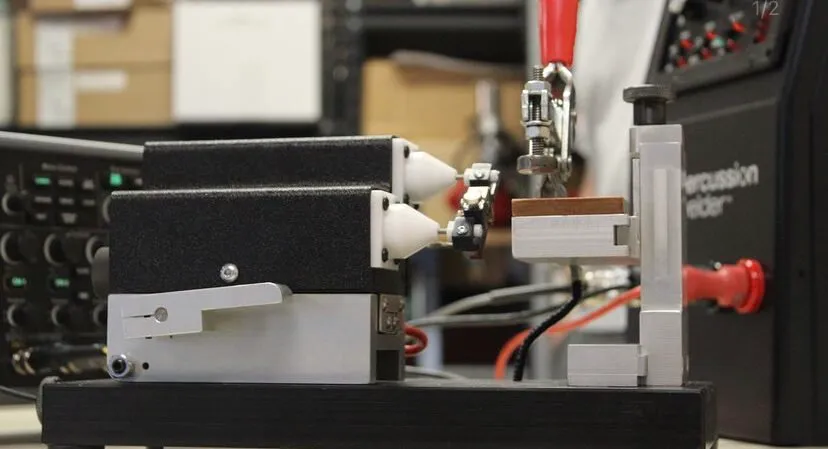
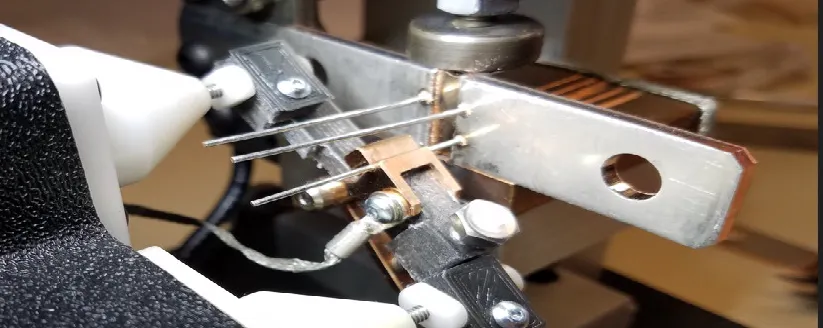
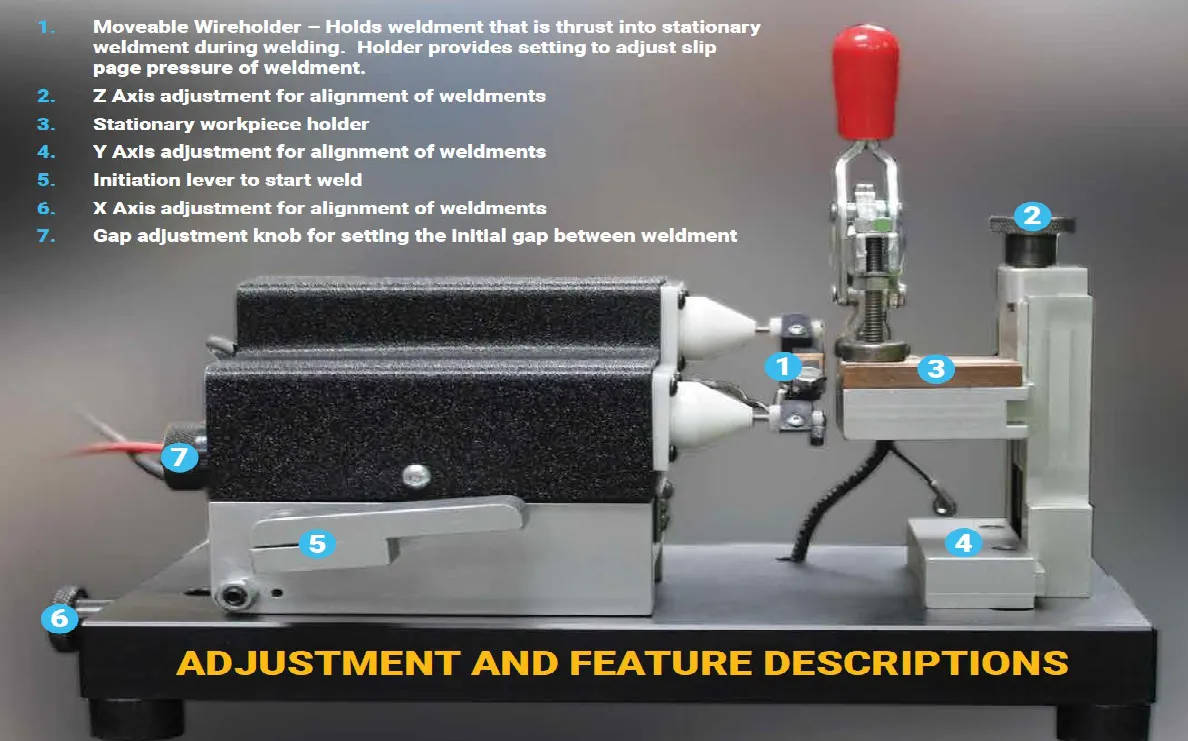
The hands. X, Y, and Z-axis alignment with precision gap control and rapid mechanical motion to forge the weld. This is the dedicated fixture that turns "I think the alignment was close enough" into "the alignment is documented and repeatable."
Percussion Weld Monitor (Optional)
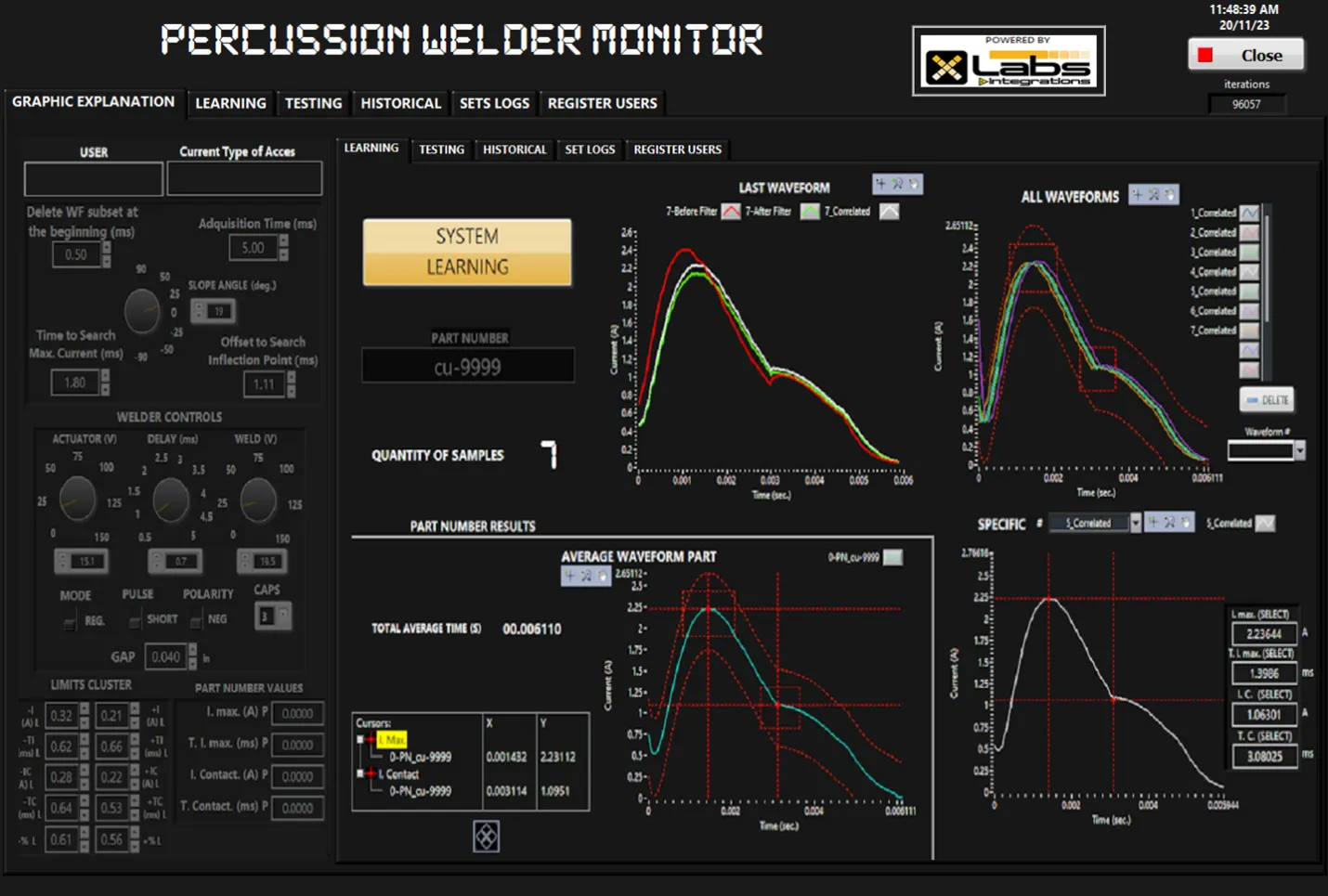
The quality inspector that never takes a coffee break. Waveform analysis on every weld, pass/fail classification, and data capture for your QC requirements. Particularly valuable for medical and aerospace where you need to prove every joint, not just sample them.
Chapter 08 / 11
Questions We Hear From 528 & 628 Owners
Superior is no longer manufacturing the 528-series machines, and original parts are increasingly difficult to source. The 858 is the direct technological successor — same process, modern controls. If your 528 is still running but aging, we can evaluate your current setup and show you exactly how the transition works with your existing weld schedules and fixtures.
The 858 uses the same arc-percussive process and produces the same metallurgical bond type as your current machine. Many customers find that re-qualification is streamlined rather than started from scratch, because the process fundamentals are identical and the 858 actually provides better documentation and monitoring capabilities. That said, re-qualification requirements are application-specific — we recommend discussing your particular standards with your quality team and ours.
Operators who are already proficient with the 628 typically get comfortable with the 858 in hours, not days. The process is the same — what changes is the precision of the controls. Most of the transition time is spent discovering that parameters you couldn't previously adjust are now available, which usually leads to better weld quality, not disruption.
The core capability was always there — percussion welding inherently handles dissimilar metals. What the 858 adds is wider, more precise energy control that makes previously "marginal" material combinations reliably producible. Our weld schedule database covers combinations including copper, tungsten, tantalum, molybdenum, nickel, aluminum, stainless steel, niobium, platinum, and many others across wire diameters from .005" to .070". Check our full schedule database →
Absolutely. We run live demonstrations on your materials, with your geometries, at our facility in Denver. Bring your parts, bring your current weld spec, and we'll show you what the 858 does with them. No obligation, no PowerPoint — just metal on metal. Schedule your demo →
Want to see it on your parts?
Send samples and we'll run test welds before you commit.
Chapter 09 / 11
Your 528 Earned Its Retirement.
It welded thermocouples when "the internet" was still a novelty. It bonded dissimilar metals before your quality system went digital. Give it a proper send-off — and give your operators the controls they've been working around for years.
Chapter 10 / 11
Our Micro Wire Welding Machine Process
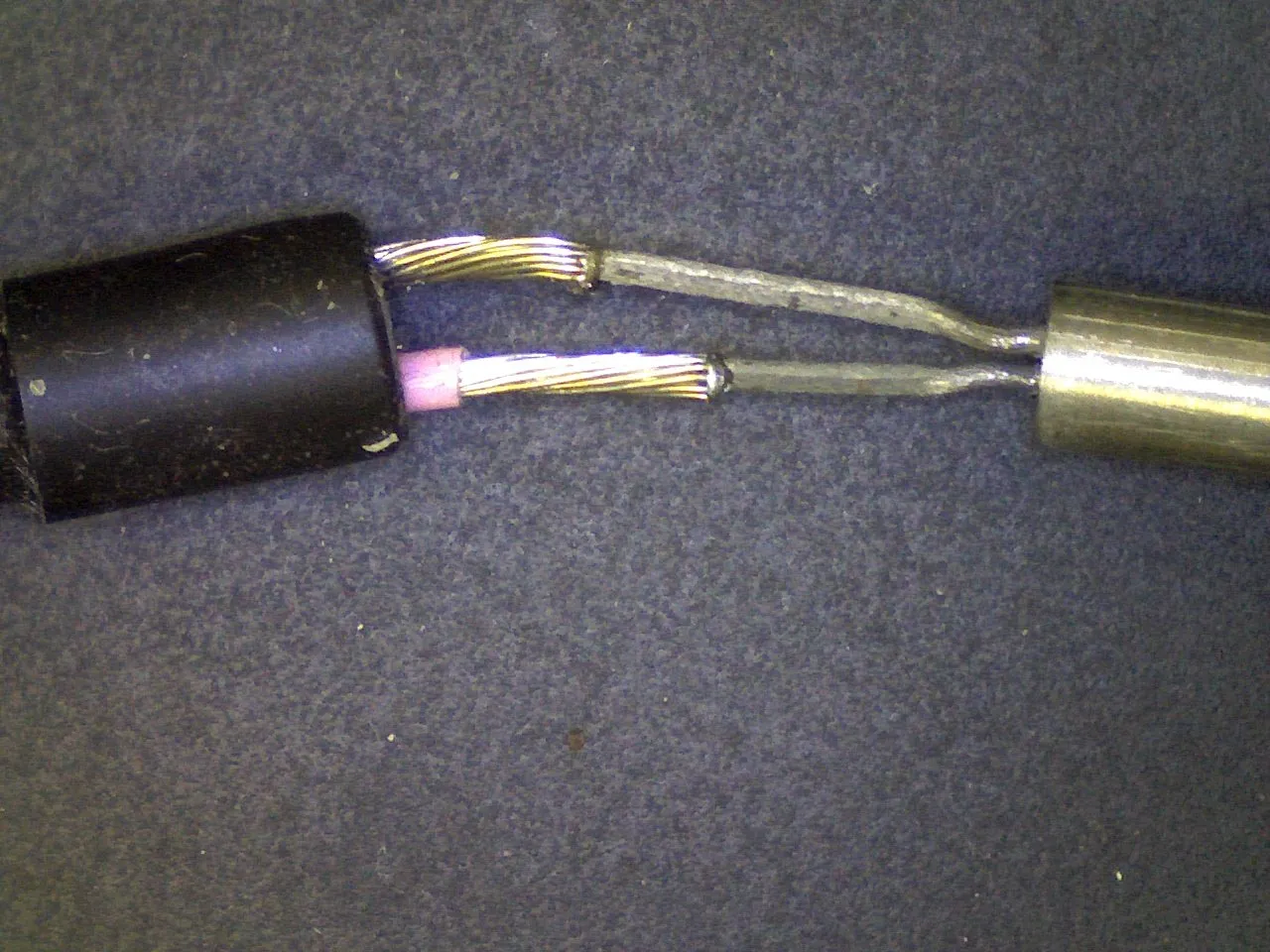
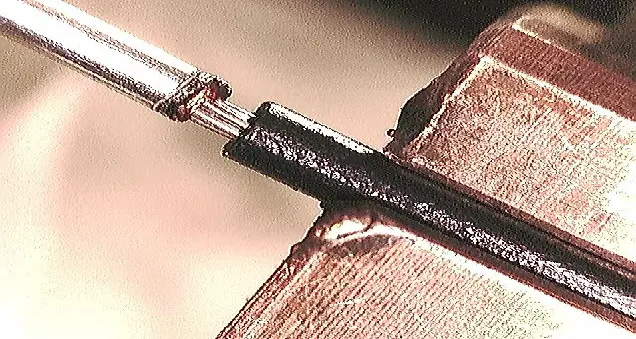
The Percussion Welder Model 858 is a top micro arc welding machine. It allows two wires of similar or dissimilar metals to be welded together quickly, efficiently, and with precision and control.
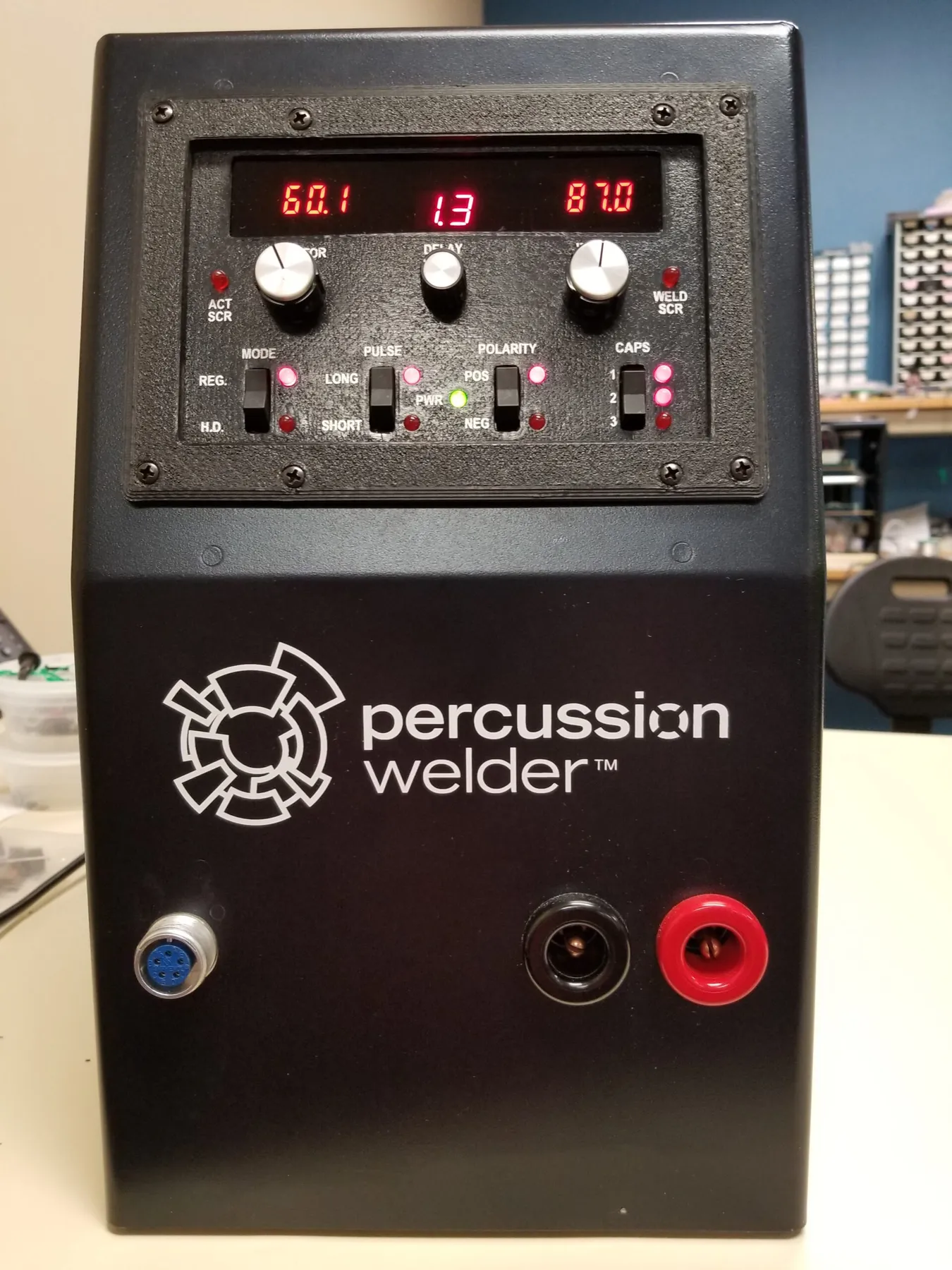
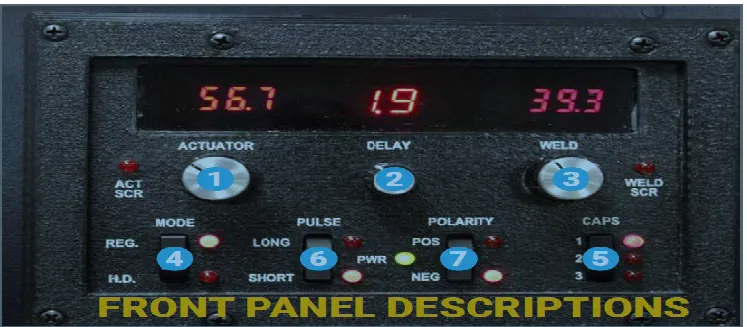
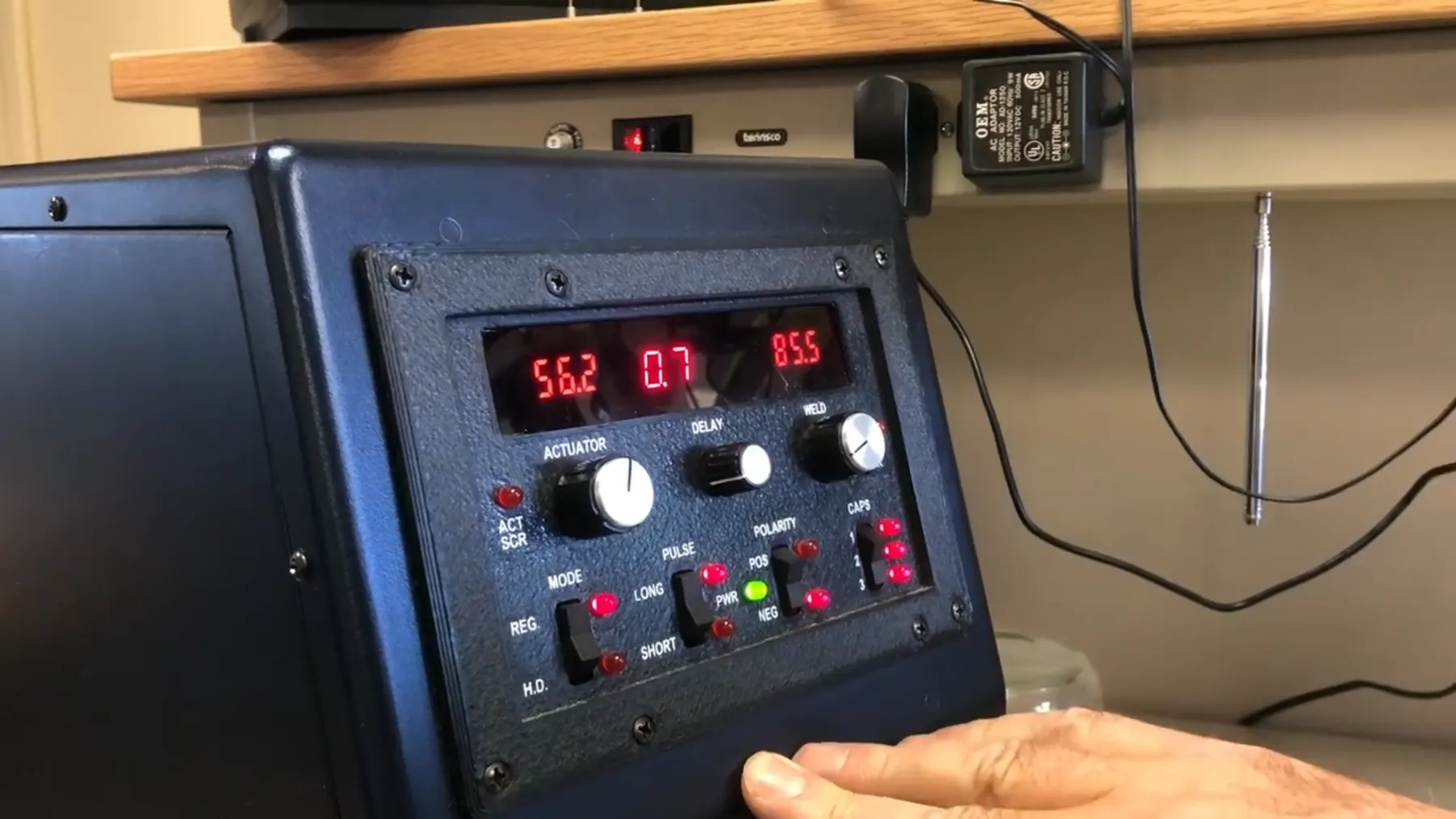
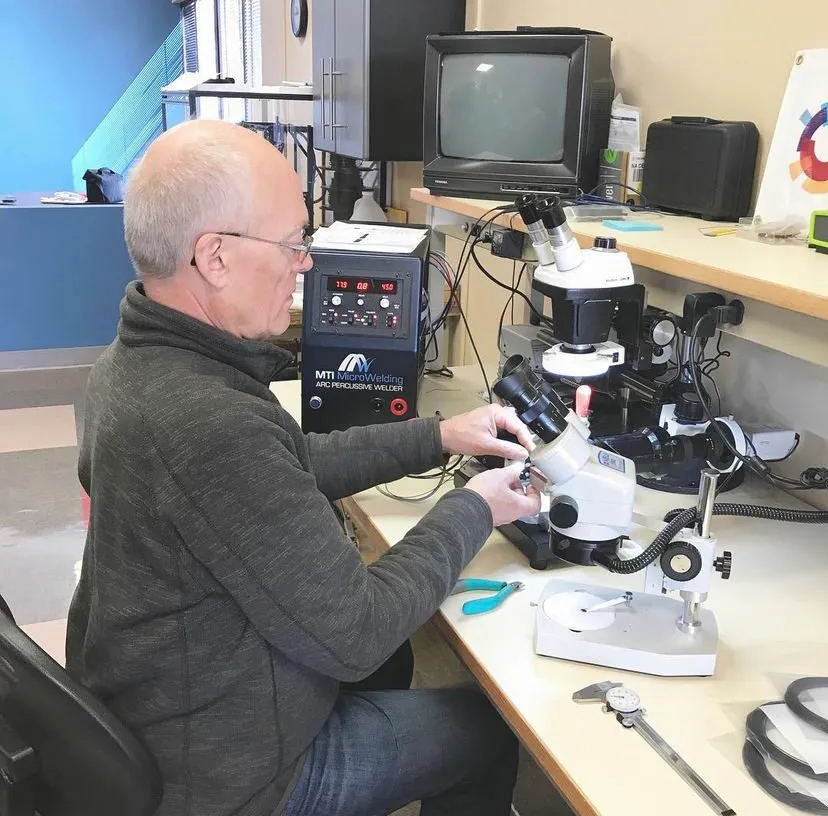
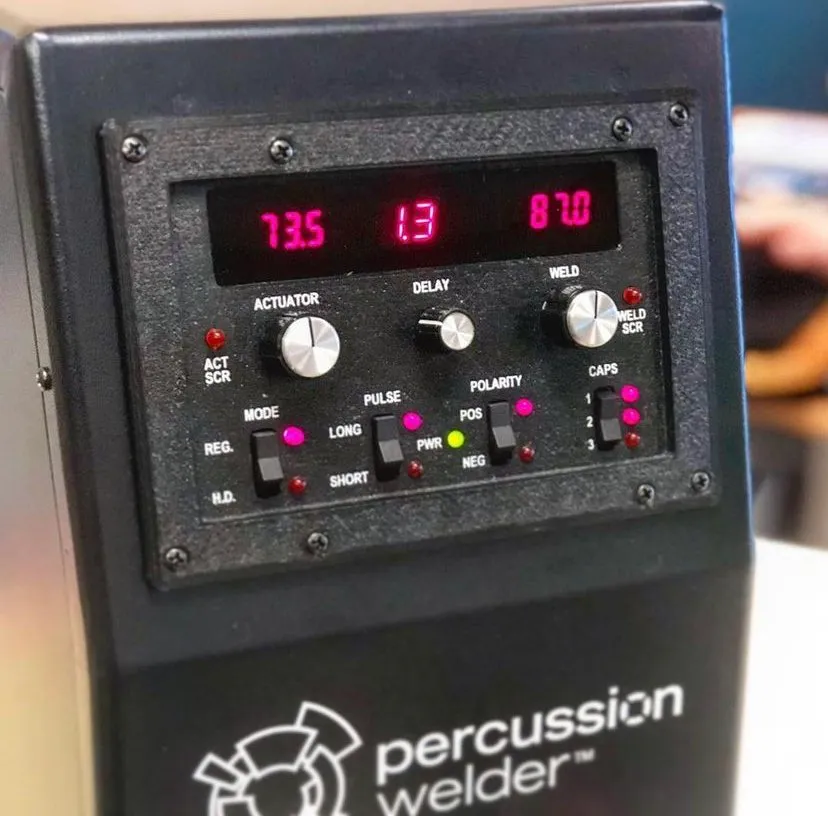
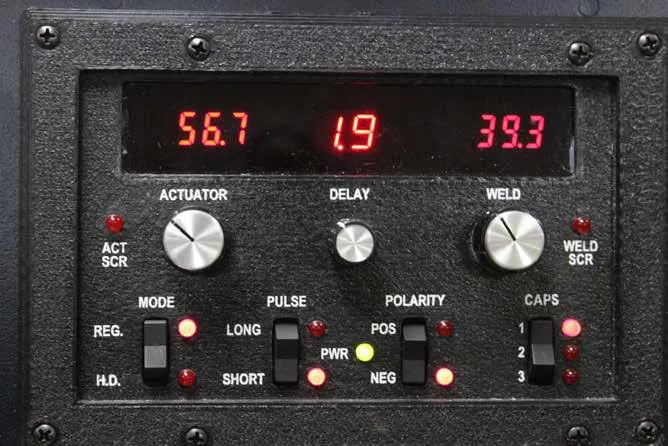
The Model 858 is the control system for the bench unit, and it offers precision adjustment for different metals, diameters of materials, and the specific current required for the process. This control over the micro welders equipment is user-friendly, with dial control over the actuator, delay, and weld energy voltage control.
The user can also adjust the mode, pulse, polarity, and capacitance for each weld using clearly marked switches on the panel. The system is ready to use upon arrival, and with intuitive operation, our micro spot welding machine is easy to integrate into any process.
Our mirco welding equipment is ideal for manual operation, but it is easily adaptive and integrated into automated production lines and processes. The Model 858 micro welding machine system comes with the Model 726 Bench Fixture and the optional Percussion Weld Monitor that tests welds for customizable good/no good quality control.
If you have any questions about our micro welding machines, or if you are struggling to find a micro welding solution, call us at 303-536-7838 or reach out to us online.
Advanced Control Features
The 858 Percussion Welder offers a suite of advanced control features that make it an indispensable tool for precision micro-welding. The front panel is equipped with user-friendly controls that allow operators to fine-tune every aspect of the welding process. From adjusting the actuator and delay settings to controlling the weld energy voltage, the 858 provides unparalleled precision and flexibility.
Operators can select from various mode settings, including regular and heavy-duty, to match the requirements of their specific application. The ability to control pulse width, polarity, and capacitance ensures that each weld is optimized for strength and durability. These features make the 858 Percussion Welder a versatile solution for a wide range of micro-welding tasks.
| SPECIFICATIONS | |
| AC Input: | 110-120 VAC 60 Hz 20 amp peak; 200~220 VAC 50~60 Hz 10 amp peak |
| Circuit Protection: | 10 amp or 20 amp fuse (see above) |
| Capacitance: | Regular: Bank 1 330 µF Bank 2 1,830 µF Bank 3 8,430 µF Heavy Duty: Bank 1 10,230µF Bank 2 11,730µF Bank 3 18,330µF |
| Bank voltage range: | 0-150V |
| Repetition rate: | |
| Timing Delay: | 0.5 to 5.0 milliseconds |
| Triggering: | Closed contact 15v |
| Polarity: | Positive or Negative: User Selectable |
| Actuator Energy: | 0 to 30 Joules into 0.6 ohms |
| Actuator Speed: | 0-33 in/per sec. (0-150V) |
| Cooling: | Fan forced air |
| Dimensions: | 9”W X 15”H X 20”D (229mm) (381mm) (508mm) |
| Weight: | 35lb (16kg) |
Chapter 11 / 11
Operation So Simple And Intuitive, We Can Show You How To Use it.
If you’re like us, sometimes a picture (or video) is worth a thousand words. Watch our video showing you step-by-step how easy Percussion Welder 726 Bench fixture is to operate.

Where to next
858 Percussion Welder
The 858 Percussion Welder Front panel makes micro-welding simple with the advanced features any type of micro welding is possible. Call us on 303-536-7838 for more details.
Open →726 Bench Fixture
The 726 Bench Fixture is the “weld head” of the MTI Percussion Welder system. When combined with the Model 858 Percussion Welder the system provides everything required for producing consistent, reliable weld joints. Call us on 303-536-7838 for more details.
Open →Percussion Weld Monitor
The Percussion Weld Monitor provides waveform analysis to aid in the development of weld settings, define a "signature" waveform for any particular product, evaluate production welds, and collect data to meet your QC requirements. Call us on 303-536-7838 for more details.
Open →Schedule a zoom meeting
As a token of our gratitude, we'd like to invite you to watch a brief video showcasing the Percussion WeldMonitor in action. This video offers a firsthand look at the capabilities and benefits of our welding monitoring
Open →FAQ
Is the 858 a direct successor to the 528 and 628?
Yes. Superior no longer manufactures the 528-series and original parts are increasingly difficult to source. The 858 uses the same process with modern controls.
Will my existing weld schedules carry over?
They are your starting points on the 858. The physics is identical, so you are not starting from zero. You will likely refine them because the 858 gives finer control than the older machine.
Do I have to re-qualify?
The 858 uses the same arc-percussive process and produces the same bond type, so many customers find re-qualification streamlined. Requirements are application-specific, so discuss your standards with your quality team and ours.
How long does operator training take?
Operators already proficient on the 628 typically get comfortable with the 858 in hours, not days. The process is the same; what changes is the precision of the controls.
What do I gain over the 528 or 628?
Front-panel control of actuator velocity, timing delay, weld voltage, pulse width, polarity and capacitance, stored weld schedules, and the optional Weld Monitor for good/no-good checks. Weld time stays under 3 ms.
Can I try it on my own materials first?
Yes. We run live demonstrations on your materials and geometries at our Denver facility. Bring your parts and your current weld spec.
Still have a question? Tell us your weld challenge and an engineer will reply.
Start here
We will show you how they translate to the 858, welded live on your materials.
Prefer to talk? Book a demo or call 303-536-7838