The process
4
stages: gap, arc, percussive thrust, bond
< 3 ms
typical heating time
None
filler material used
Minimal
heat-affected zone
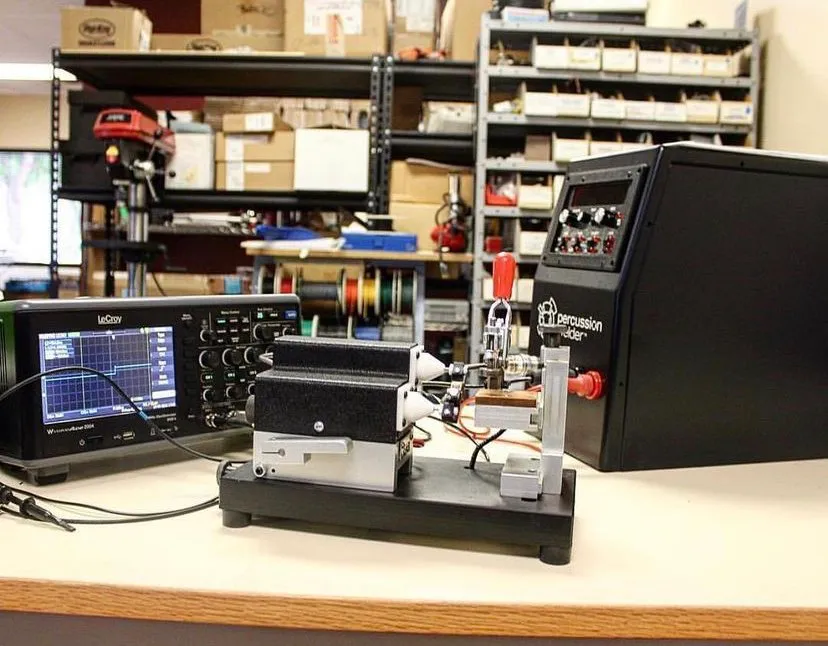
Percussion welding combines heat and percussive force to create a robust metallic bond between two materials. The process involves generating a micro arc that produces the necessary heat, followed by a rapid mechanical movement that forces the materials together. This technique results in a strong, durable weld with minimal heat-affected zone, making it ideal for joining dissimilar metals. Our advanced Percussion Welder system ensures precision and reliability, enabling innovative designs and high-quality welds across various industries.
Chapter 01 / 07
Advanced Micro-welding With A Smooth Learning Curve
Percussion welding equipment empowers you to join difficult to weld material combinations together, in orientations previously considered impossible.
The percussion welding process is quick to learn, easy to operate with direct welds between dissimilar metals, and it is low maintenance, helping you get up and running fast while minimizing potential downtime. Learn more about our percussion welder.
Chapter 02 / 07
What Is The Percussion Welding Process?
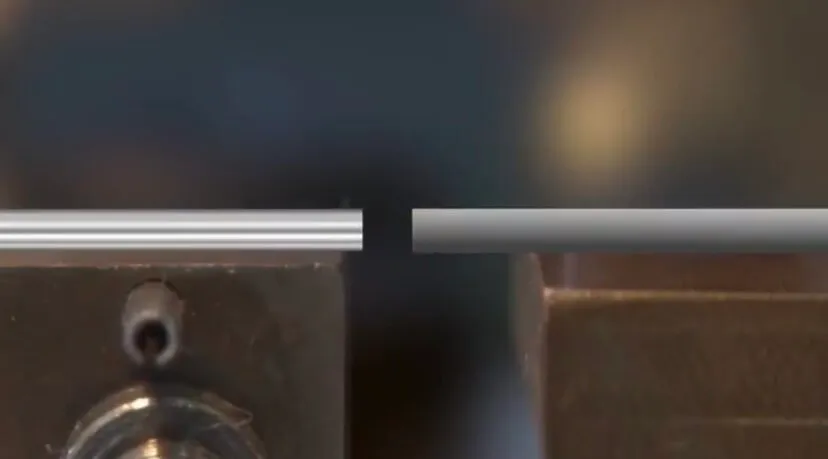
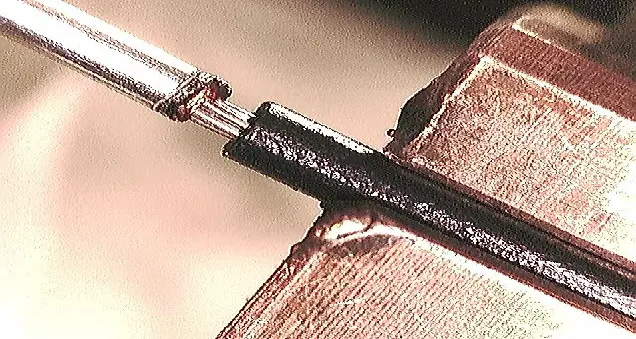
Two metals are loaded with their weld points brought to a pre-defined gap.
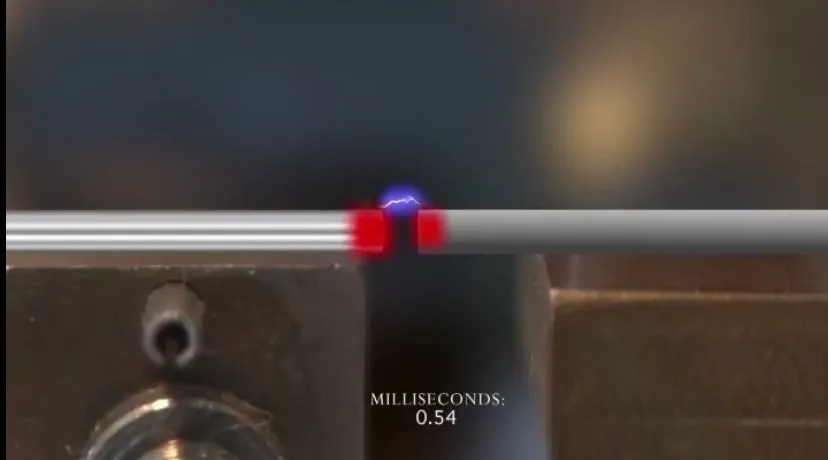
An electrical arc is generated between the materials to be joined.
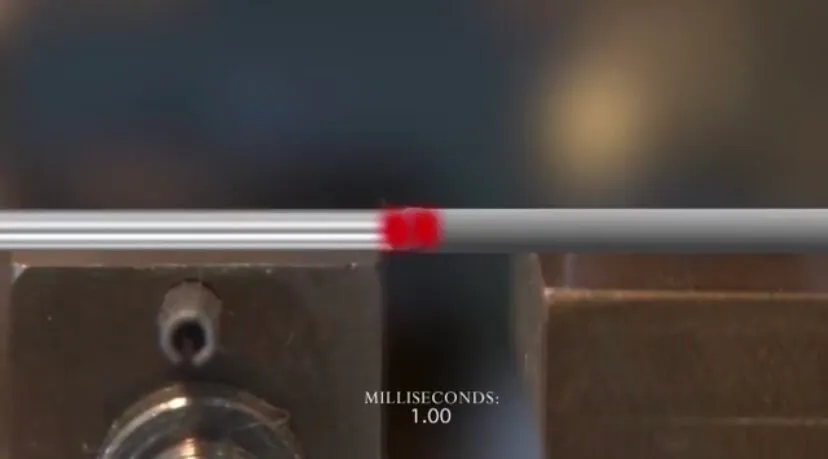
Each material becomes molten. The materials are thrust together in the percussive phase, creating a full bond between the materials.
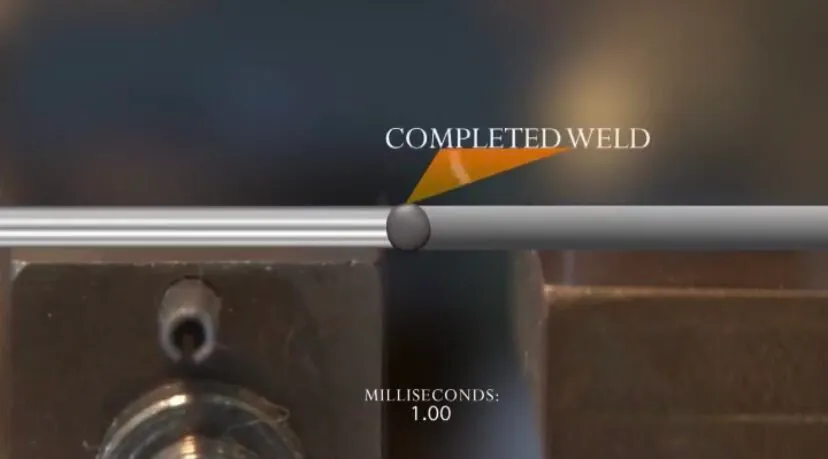
Within milliseconds, the two materials are welded together without using any filler material.
Want to see it on your parts?
Send samples and we'll run test welds before you commit.
Gallery
The process, up close
From the pre-defined gap to the finished joint.

Chapter 03 / 07
What Is Percussion Welding?
Percussion welding is a highly versatile process that can be used to weld a variety of metals including aluminum, brass, copper, steel, and titanium. The percussion welding process produces high-quality welds with little or no distortion.
These types of welds can apply from the smallest application to large scale applications that can include micro welding for manufacturing, small area components, and allow for a streamline production due to its compact design.
s, making it an indispensable component of the welding process.
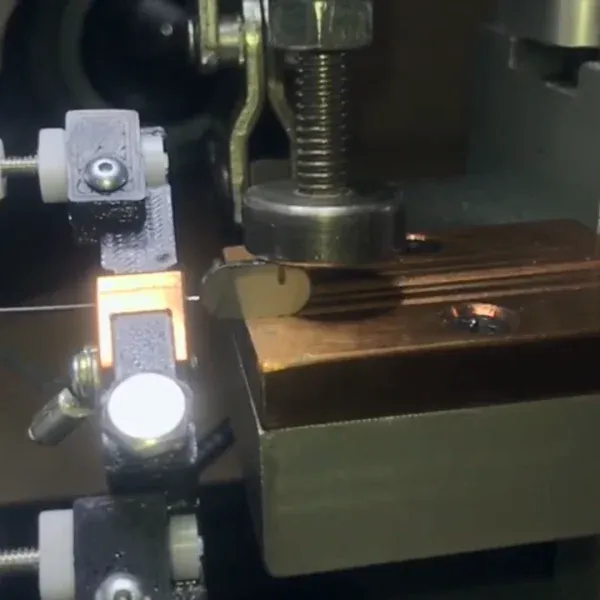
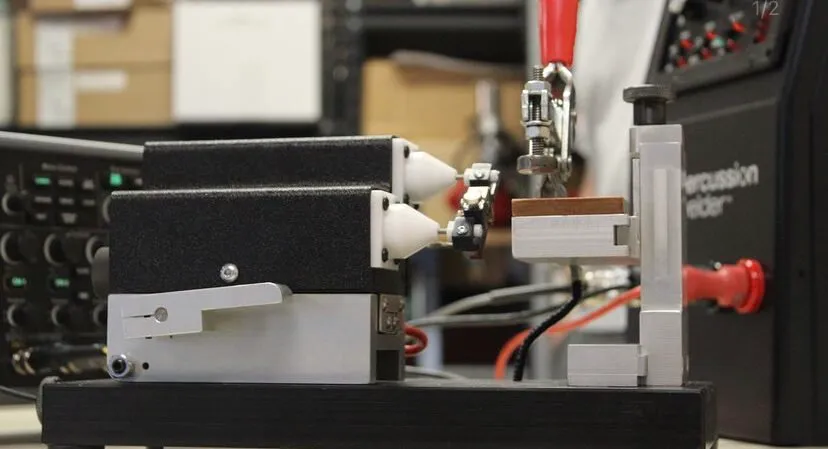
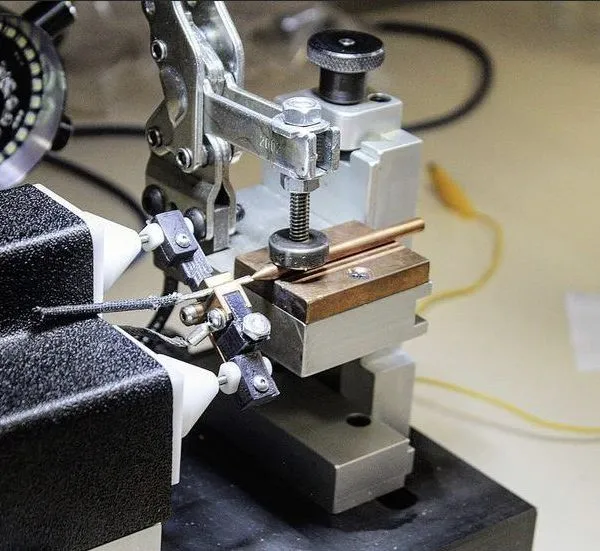
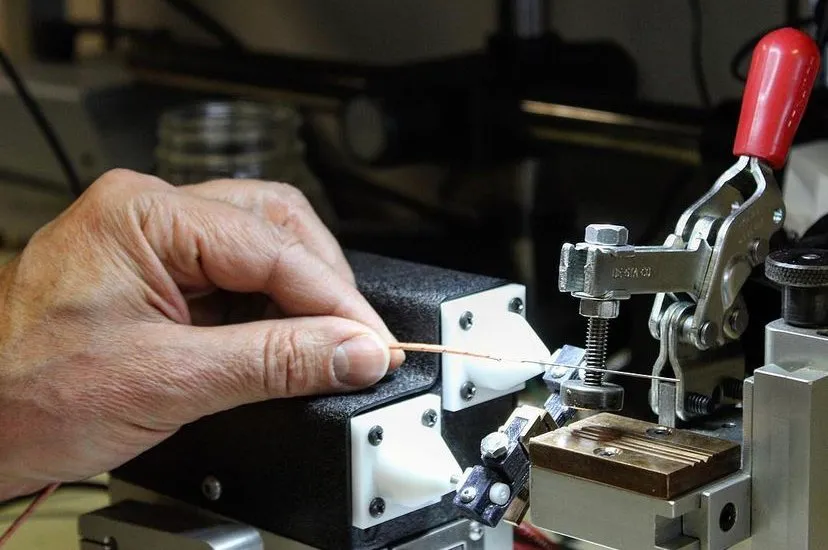
See the features listed below to learn how to clamp and align your weld materials. With advanced capabilities such as Z-axis and Y-axis adjustments for precise alignment, the 726 Bench Fixture allows for seamless integration into your welding workflow. Its robust construction and ergonomic design make it easy to use, enhancing the overall efficiency and quality of your welding operations.
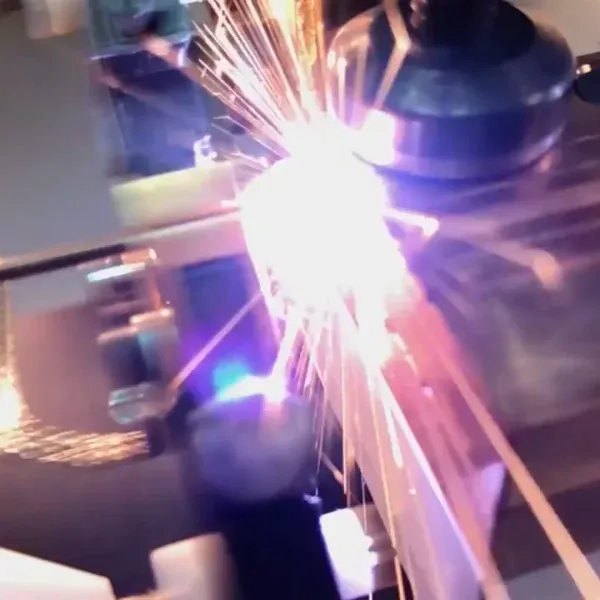
To percussion weld two pieces of metal together, a welder needs to create an electric arc between the two pieces.
This process can be difficult and dangerous if not done correctly. If the welder is too close to the metal, it could burn. The weld will not be strong enough if they are too far away.
Percussion welding is a type of arc welding that produces high-temperature heat from an arc. This intense heat makes it possible for the welder to join two pieces of metal that are dissimilar together quickly and safely. Because the heating time is short, usually less than 3 milliseconds, the heat affect zone (HAZ) is minimal, resulting in little or no negative affect on the materials.
This allows for micro-welding on small components, wires, and other applications in finer detail.
Chapter 04 / 07
What Is A Percussion Welder?
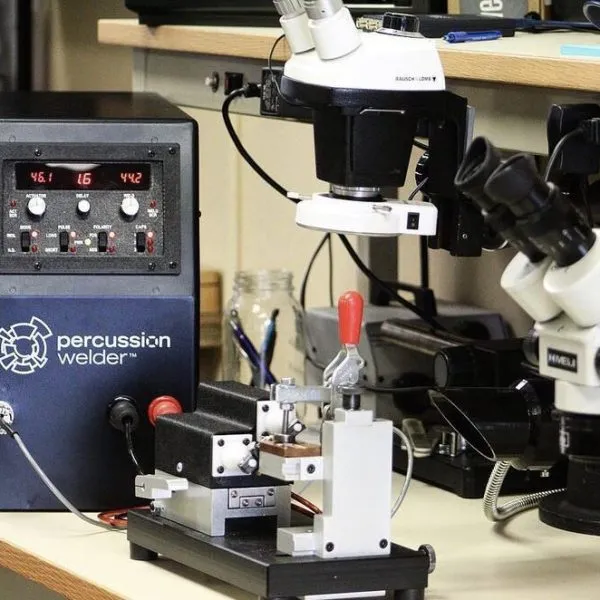
A Percussion welder is a micro welder that allows for two different metals on smaller surfaces to be joined together effectively.
Percussion welding is an advanced technology for micro welding. It offers many benefits over other methods, including faster cycle times and higher quality welds.
With percussion welding, you can join metals together quickly and easily with little to no post-welding cleanup. This makes it the perfect choice for manufacturing companies looking to save time and money.
Percussion Welding can also be known as micro-welding and there are multiple setups for these units to accommodate all your needs
Chapter 05 / 07
The Percussion welding process allows for a way to weld dissimilar metals together
A Percussion Welder generates a minuscule heat-affected zone, and there’s never a need to crimp and solder because you’re creating an autonomous weld.
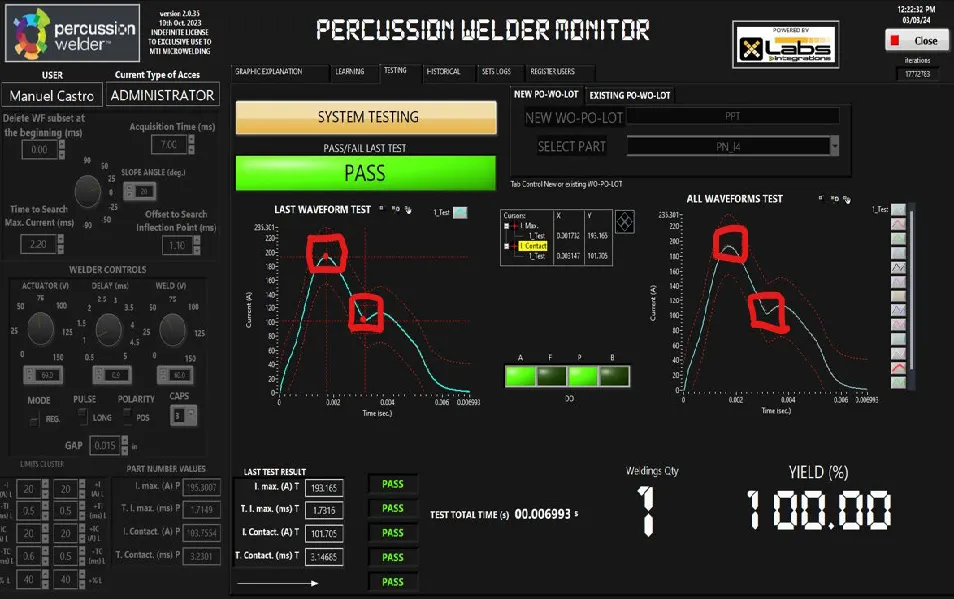
In addition to the 858 Percussion Welder, we have recently introduced the Percussion Weld Monitor. A monitor is an excellent tool for both process development as well as production monitoring.
Want to see it on your parts?
Send samples and we'll run test welds before you commit.
Chapter 06 / 07
Experience the Benefits of Advanced Percussion Welding
Quick Learning Curve
The percussion welding process is incredibly user-friendly, allowing you to master it quickly. Our intuitive system ensures that you can start producing high-quality welds with minimal training, reducing downtime and accelerating your production schedule.
Versatile Metal Joining
Percussion welding excels in joining a variety of metals, including aluminum, brass, copper, steel, and titanium. This versatility makes it an ideal solution for multiple industries, from automotive to aerospace, ensuring strong, reliable welds every time.
Minimal Heat-Affected Zone
One of the standout features of percussion welding is its minimal heat-affected zone (HAZ). The rapid welding process significantly reduces the risk of material distortion, preserving the integrity of the metals and resulting in cleaner, stronger welds.
Efficient and Cost-Effective
Our percussion welding technology eliminates the need for consumables like electrodes and filler materials, reducing waste and lowering costs. The fast cycle times and minimal post-weld cleanup further enhance efficiency, making it a cost-effective choice for manufacturers.
Chapter 07 / 07
Operation So Simple And Intuitive, We Can Show You How To Use The Bench Fixture
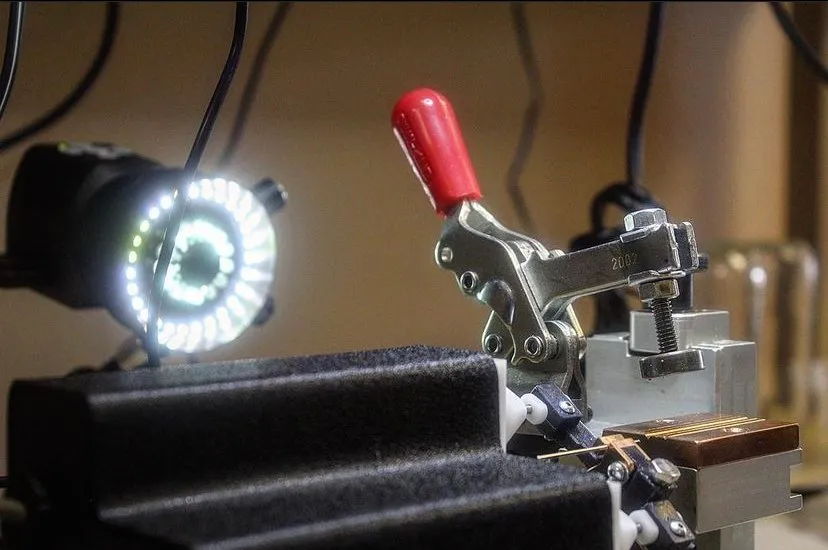
If you’re like us, sometimes a picture (or video) is worth a thousand words. Watch our video showing you step-by-step how easy Percussion Welder 726 Bench fixture is to operate.


Topic guide
Process & Technique: articles
Where to next
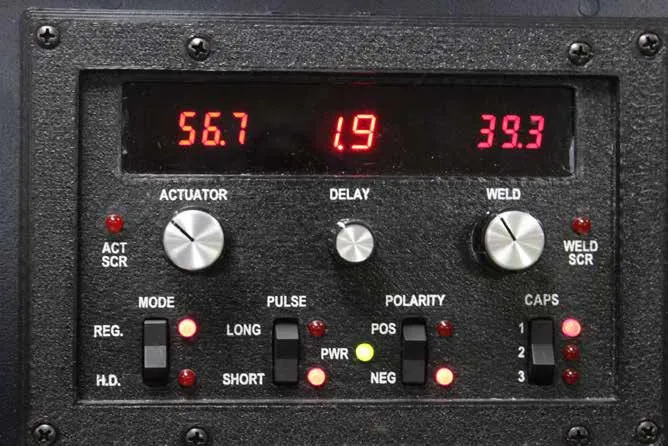
858 Percussion Welder
The 858 Percussion Welder Front panel makes micro-welding simple with the advanced features any type of micro welding is possible. Call us on 303-536-7838 for more details.
Open →726 Bench Fixture
The 726 Bench Fixture is the “weld head” of the MTI Percussion Welder system. When combined with the Model 858 Percussion Welder the system provides everything required for producing consistent, reliable weld joints. Call us on 303-536-7838 for more details.
Open →Percussion Weld Monitor
The Percussion Weld Monitor provides waveform analysis to aid in the development of weld settings, define a "signature" waveform for any particular product, evaluate production welds, and collect data to meet your QC requirements. Call us on 303-536-7838 for more details.
Open →Process Development
If you have a project that requires a unique or intricate micro welding solution, contact us and we will evaluate the application with you. Call us on 303-536-7838 for more details.
Open →FAQ
What are the stages of a percussion weld?
Four. The two metals are loaded with their weld points at a pre-defined gap. An electrical arc is generated between them. Each material becomes molten and the two are thrust together in the percussive phase. Within milliseconds they are welded, with no filler material.
How long does the heating take?
Heating time is usually less than 3 milliseconds. That short exposure keeps the heat-affected zone minimal, with little or no negative effect on the materials.
Which metals can it join?
Percussion welding can join aluminum, brass, copper, steel and titanium, and it is well suited to joining dissimilar metals directly. Because the weld is made in place, there is no need to crimp and solder.
Does it need filler, flux or other consumables?
No. No filler material is used, and the process needs little or no post-weld cleanup.
How hard is it to learn?
The process is quick to learn and easy to operate, and you can start producing welds with minimal training. The 726 Bench Fixture clamps and aligns the parts.
Can I monitor the weld?
Yes. The Percussion Weld Monitor is described as a tool for both process development and production monitoring.
Still have a question? Tell us your weld challenge and an engineer will reply.
Start here
Send your materials or call 303-536-7838 and we will show you how they weld.
Prefer to talk? Book a demo or call 303-536-7838