
Process development
3
stages: application review, process evaluation, process development
1 to 4 ms
rapid heating of the weld surfaces
< 100 g
force often needed in the percussion phase
On site
development usually at your facility
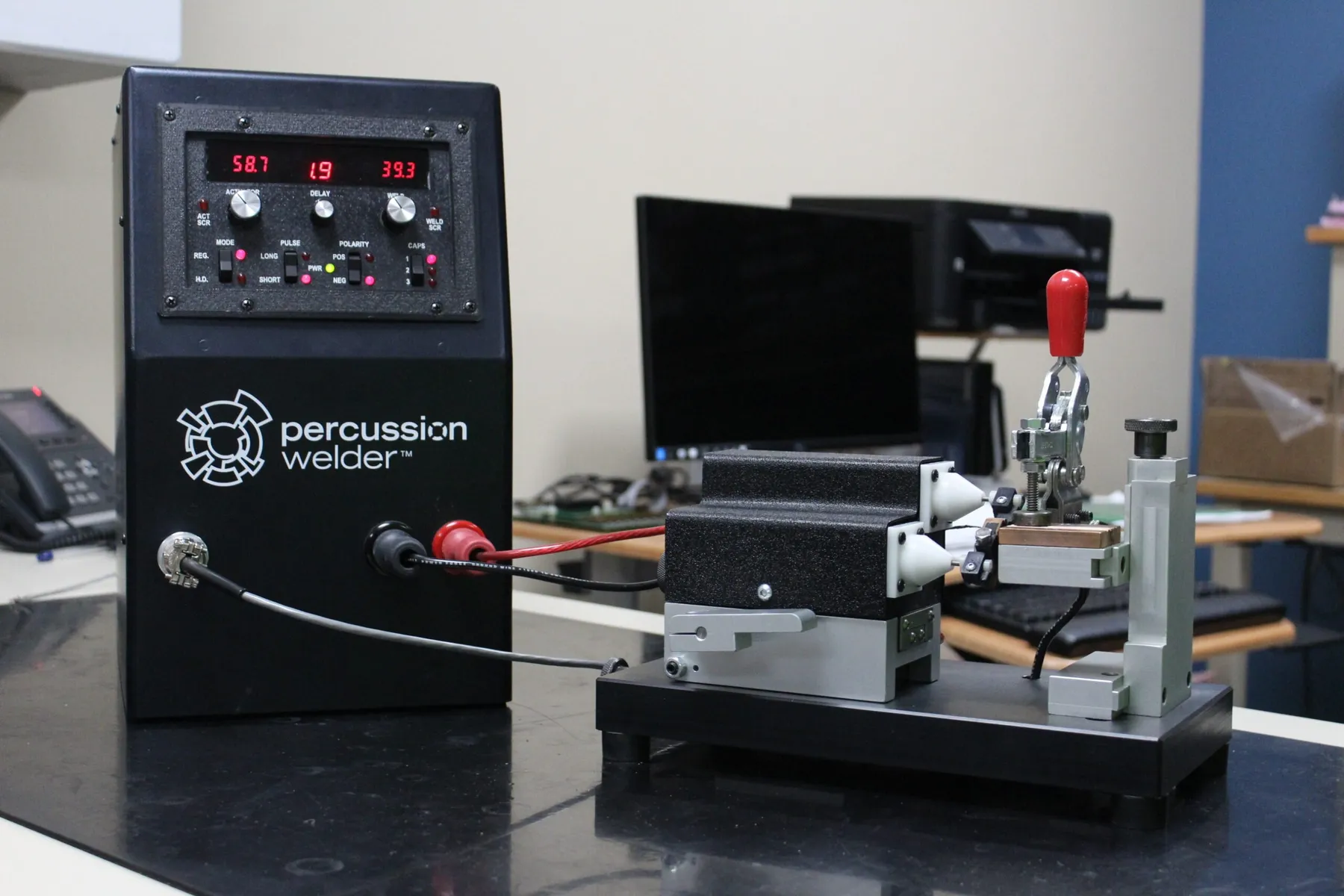
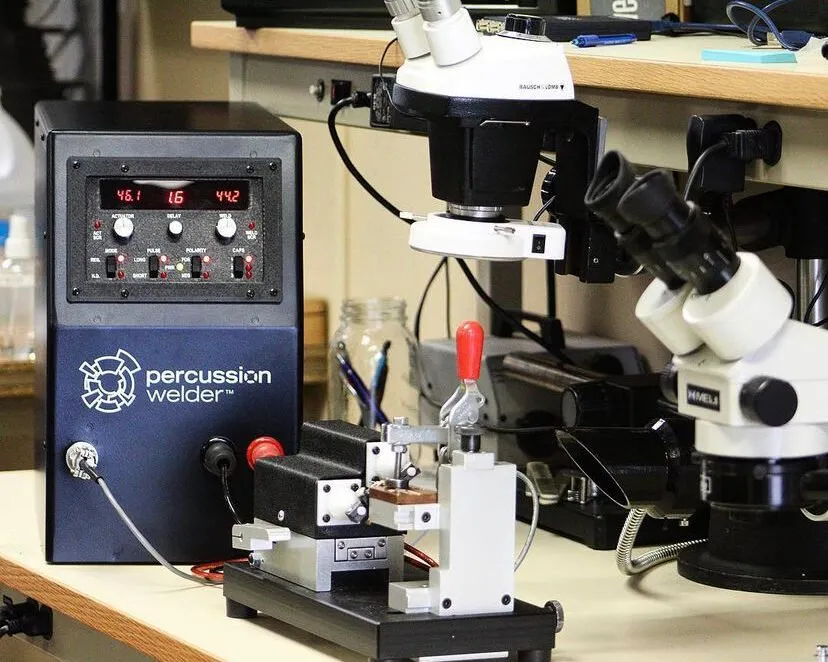
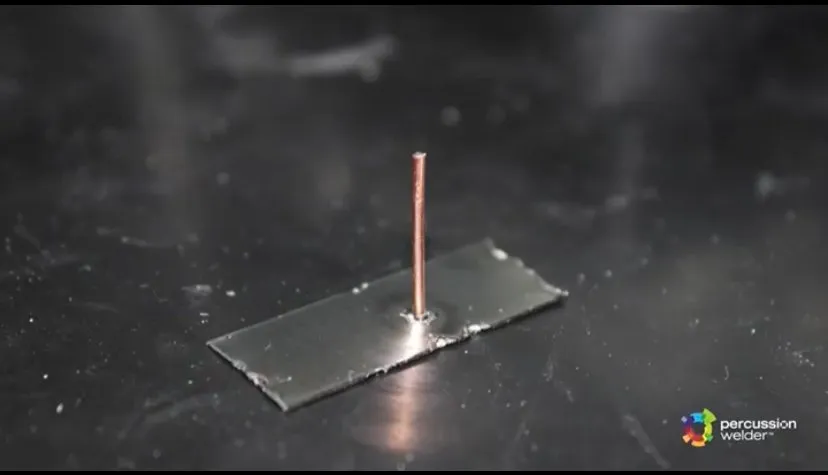
Percussion Welders are unique in their function, due to the way they work they can join dissimilar metals without any damage or distortion caused to the metals in a way that would be more or less impossible using any other method.
Previous
Next
Chapter 01 / 08
How Does Percussion Welder Work?
Percussion welding is completed in two simple steps. The first step involves heating the surfaces to which the weld will be applied, which it does rapidly, in 1 – 4 milliseconds. It is because it is so quick that there is an incredibly small risk of damaging or warping the surfaces, which is part of what makes percussion welders so perfect for the job.
The second step is the percussion phase of the weld, where the molten materials are pushed together in a single and rapid motion, creating a strong bond. Like the first step, the second step offers a very, very low chance of damaging any materials because, with this step, it is a very light pressure joining the dissimilar materials. It is often less than 100 grams of force, but the materials have been heated so efficiently that this is all that is required for the weld to take immediate effect. All this means that the most delicate of materials can be joined with little to no chance of damage or distortion.
Process Development
Percussion Welders are unparalleled in their ability to join dissimilar metals without causing damage or distortion. Unlike traditional methods, our technology ensures that even the most delicate materials are joined seamlessly, making it irreplaceable for intricate applications. The true brilliance of Percussion Welding lies in its ability to create strong, precise welds without the need for filler materials, preserving the integrity of the metals.
With positive results from the process evaluation, we move to process development. This phase is typically conducted in your environment to ensure seamless integration. However, if preferred, it can be performed at MTI MicroWelding.
The Perfect Solution for Your Welding Needs
Percussion Welder is the perfect solution for projects that require precision, reliability, and minimal risk of material damage. Our advanced technology ensures that even the most challenging welding tasks are handled with ease, providing you with strong, clean welds every time.
Chapter 02 / 08
Step 1: Preparation
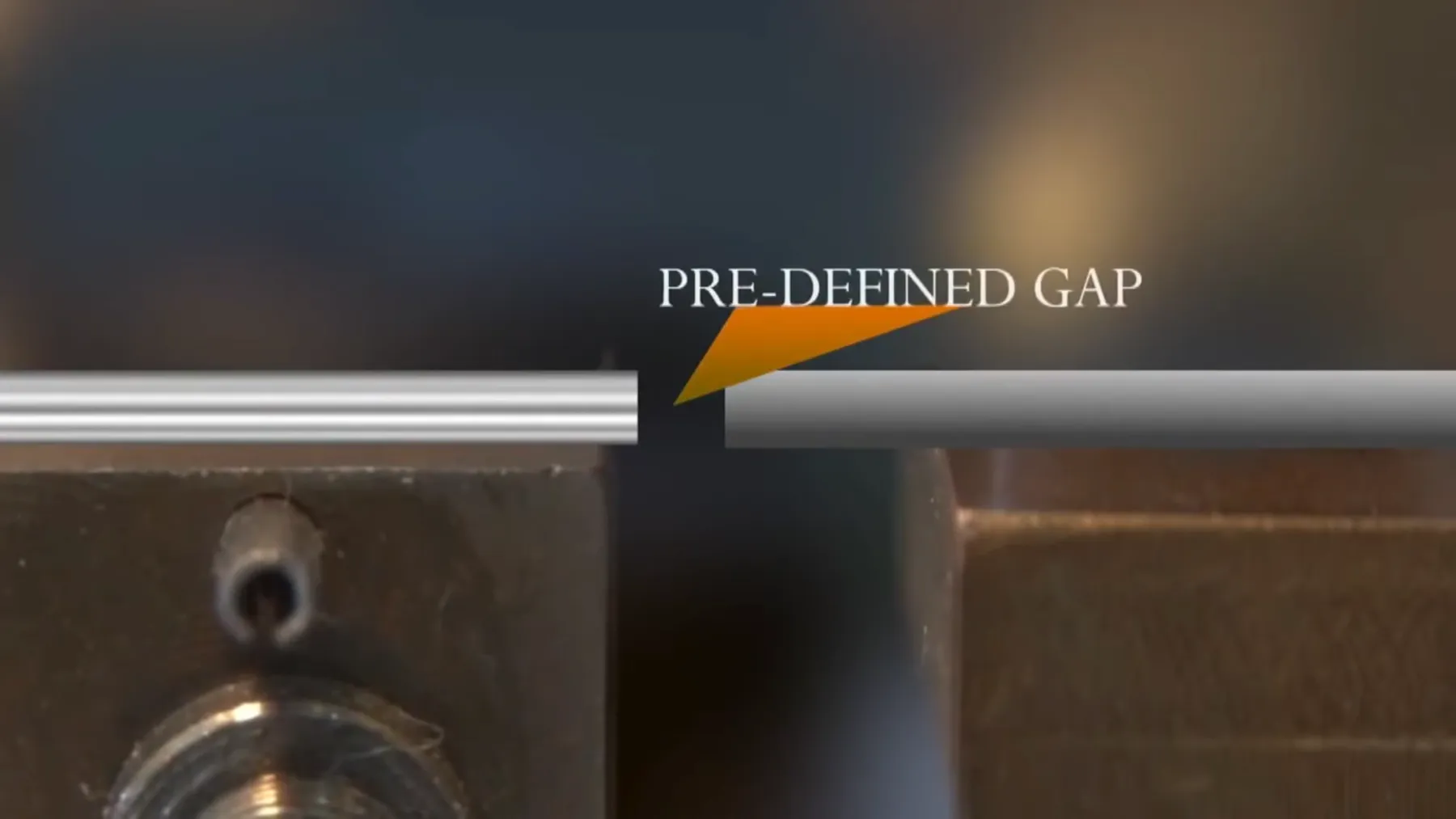
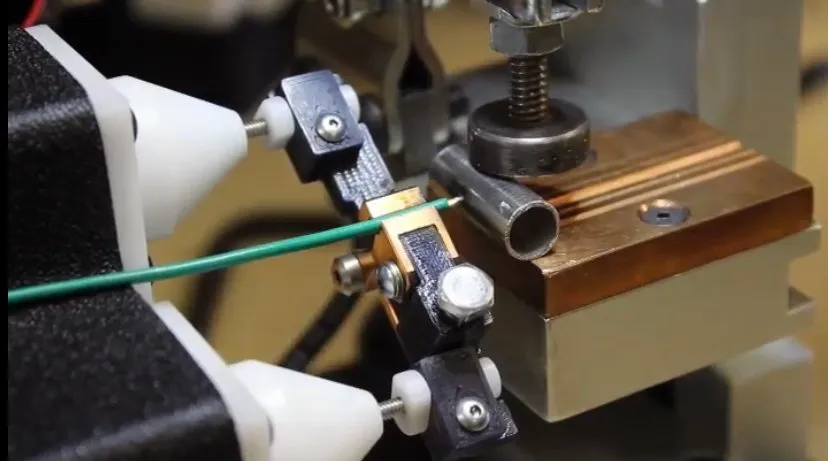
First, the surfaces to be welded are carefully positioned with a pre-defined gap. This alignment ensures that the materials are in the optimal position for the welding process. Proper positioning is crucial to achieving a high-quality weld.
Want to see it on your parts?
Send samples and we'll run test welds before you commit.
Gallery
Evaluate, develop, inspect

Chapter 03 / 08
Step 2: Rapid Heating
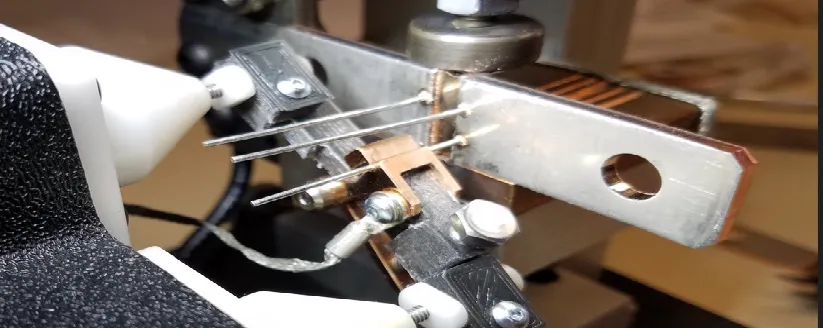
The second step involves rapidly heating the surfaces to be welded, taking only 1 to 4 milliseconds. This ultra-fast heating process minimizes the risk of damaging or warping the materials, making it ideal for delicate and intricate welding tasks. The rapid heating ensures that the materials reach the optimal temperature for welding without prolonged exposure to heat, which could cause distortion.
Chapter 04 / 08
Step 3: Percussion Phase
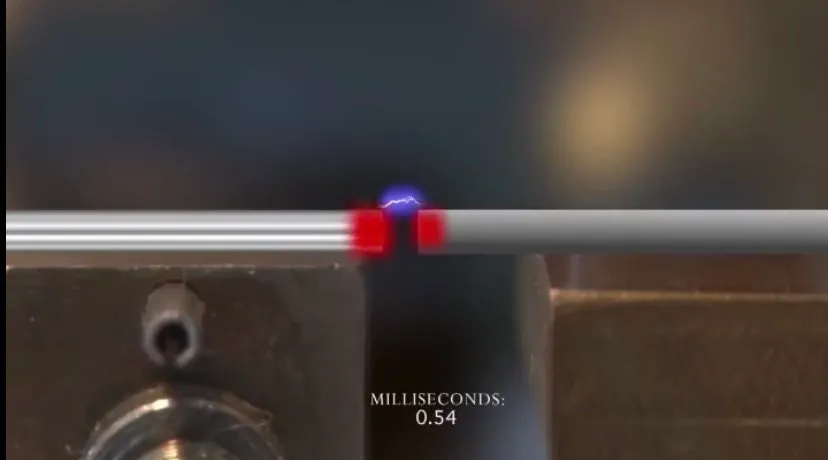
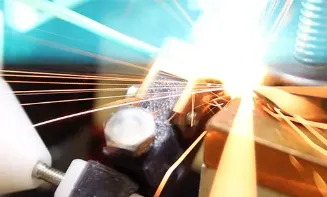
In the third step, the molten materials are brought together with a swift, light pressure in the percussion phase. This motion creates a robust bond without the need for excessive force—typically less than 100 grams. The efficiency of the heating process means that this minimal pressure is sufficient to form a strong weld, ensuring that even the most delicate materials are joined without risk of damage.
Chapter 05 / 08
Step 4: Final Inspection
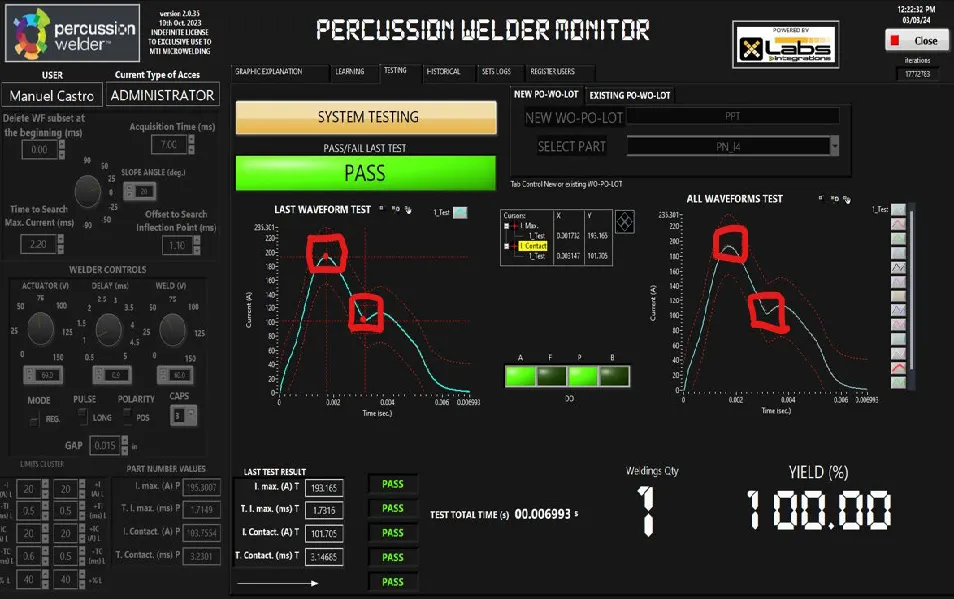
Finally, the weld is inspected to ensure it meets quality standards. This may involve visual inspection, mechanical testing, or using advanced monitoring systems like the Percussion Weld Monitor. This step ensures that the weld is strong, clean, and meets all required specifications.
Want to see it on your parts?
Send samples and we'll run test welds before you commit.
Chapter 06 / 08
Why Choose Percussion Welder?
are unique in their function, due to the way they work they can join dissimilar metals without any damage or distortion caused to the metals in a way that would be more or less impossible using any other method. A Percussion Welder is irreplaceable when it comes to the joining of delicate materials, and being able to join the fine metals with no filler materials is where the Percussion Welder truly shines.
Chapter 07 / 08
Process Development
If you have a project that requires a unique or intricate micro welding solution,
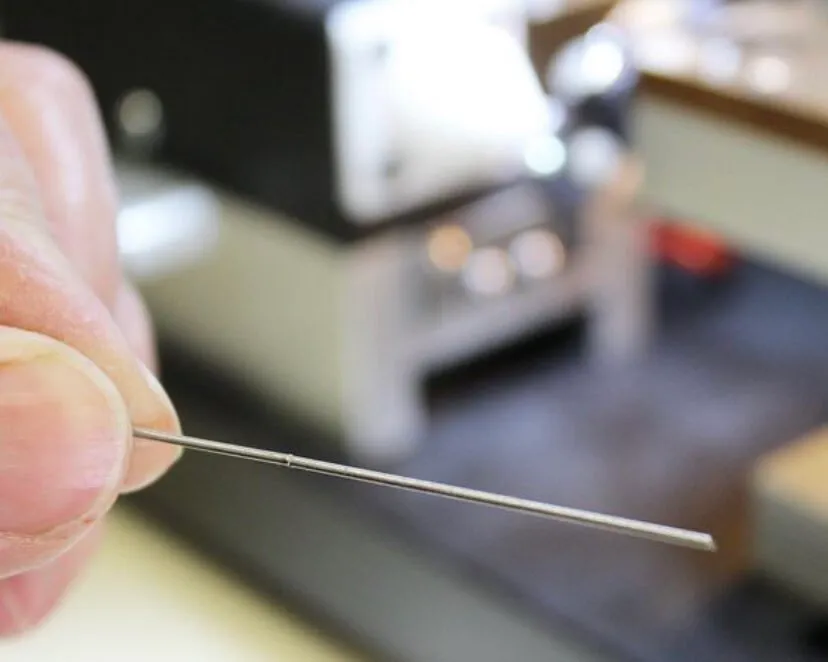
and we will evaluate the application with you. Based upon the materials and weld specifications, we can evaluate whether Percussion Welder is a good fit for your project. Next we can perform a process evaluation to determine if the weld specifications can be achieved. With positive results from the Process Evaluation, the next step is Process Development. Usually this is done in the customer's environment, however, if requested it can be performed at MTI MicroWelding.
Chapter 08 / 08
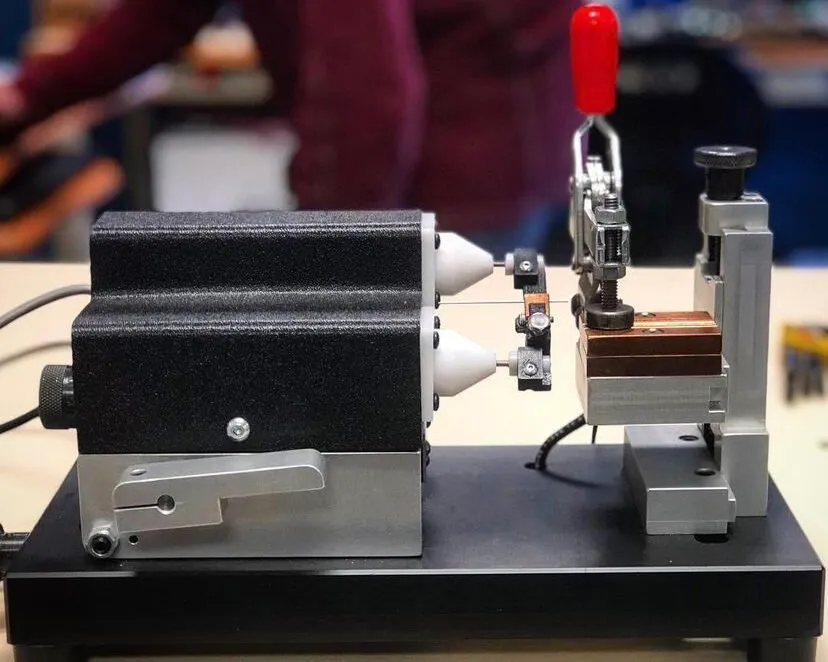
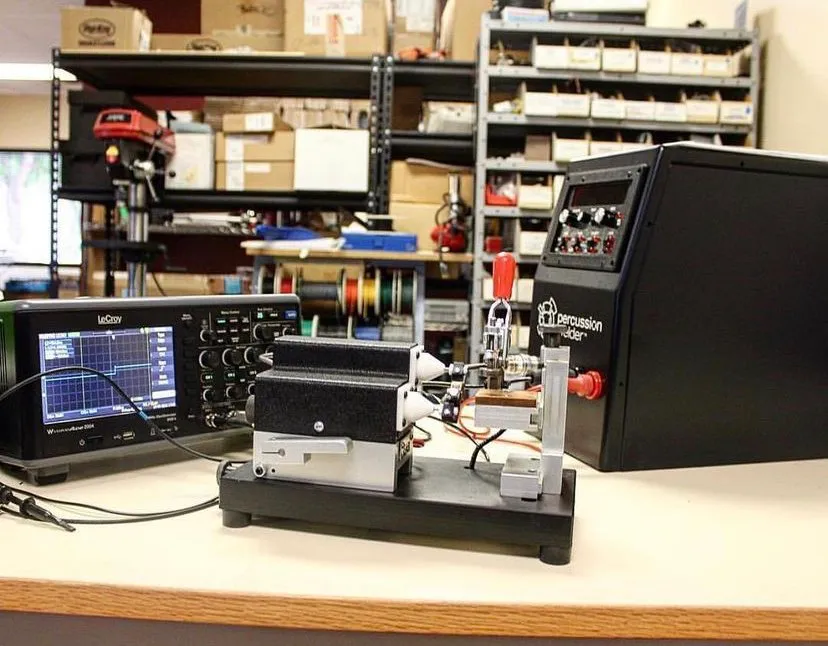
Operation So Simple And Intuitive, We Can Show You How To Use The Bench Fixture
If you’re like us, sometimes a picture (or video) is worth a thousand words. Watch our video showing you step-by-step how easy Percussion Welder 726 Bench fixture is to operate.


Where to next
How It Works
The percussion welding process is quick to learn, easy to operate with direct welds between dissimilar metals, and it is low maintenance, helping you get up and running fast while minimizing potential downtime.
Open →Percussion Weld Monitor
The Percussion Weld Monitor provides waveform analysis to aid in the development of weld settings, define a "signature" waveform for any particular product, evaluate production welds, and collect data to meet your QC requirements. Call us on 303-536-7838 for more details.
Open →858 Percussion Welder
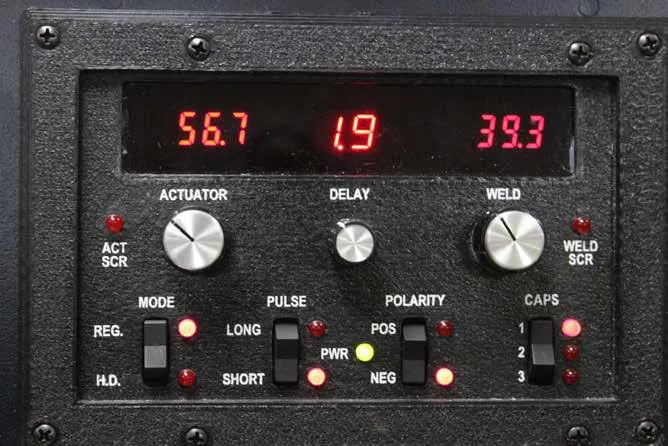
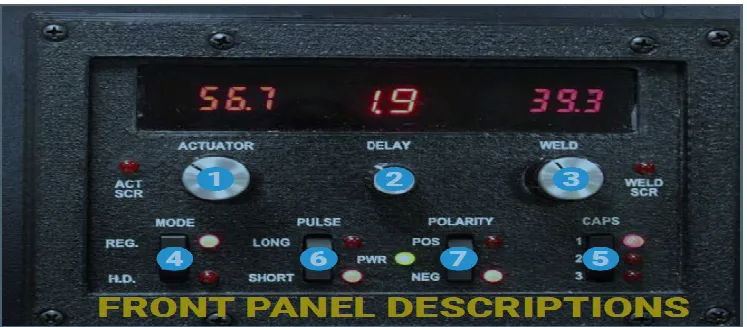
The 858 Percussion Welder Front panel makes micro-welding simple with the advanced features any type of micro welding is possible. Call us on 303-536-7838 for more details.
Open →Material List Send
Didn’t find a perfect match? Send us your materials for a complimentary compatibility test! Simply fill out the form, and we’ll email you the shipping details to begin your free
Open →FAQ
How does process development start?
You contact us about a unique or intricate micro-welding project. Based on the materials and weld specifications we evaluate whether percussion welding is a good fit.
What is the difference between evaluation and development?
A process evaluation determines whether your weld specifications can be achieved. With positive results, the next step is process development.
Where is process development done?
Usually in the customer's environment, so the process integrates with your setup. If you request it, it can be done at MTI MicroWelding.
How long does the heating take and how much force is used?
Rapid heating takes 1 to 4 milliseconds. The percussion phase is a swift, light pressure, often less than 100 grams of force.
How is the finished weld inspected?
The finished weld is checked against your quality standards. That can mean visual inspection, mechanical testing, or a monitoring system such as the Percussion Weld Monitor.
Why can it join delicate materials without damage?
The short heating time gives a very low risk of damaging or warping the surfaces, and the light percussion force adds little stress. No filler material is needed.
Still have a question? Tell us your weld challenge and an engineer will reply.
Start here
Call 303-536-7838 and we will review your application with you.
Prefer to talk? Book a demo or call 303-536-7838